Are electronic signatures valid in Europe?
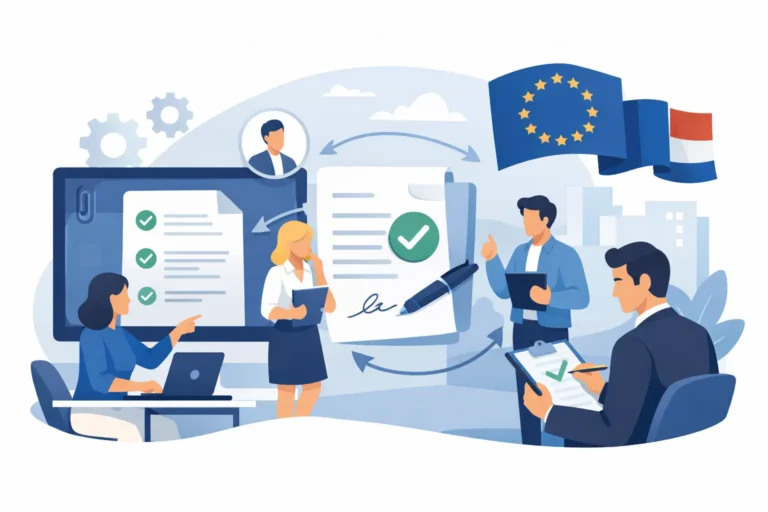
If your HR team is issuing contracts in Germany, your finance team is approving supplier terms in Portugal, and your legal contact is based in the Netherlands, the question is not whether digital signing is convenient. It is whether are electronic signatures valid in Europe is a simple yes, or a qualified one. The practical answer is yes – electronic signatures are valid across Europe, but the level of validity, evidential strength, and suitability depends on which type of signature you use and what you are asking it to support.
That distinction matters for growing businesses. Many documents can be signed electronically without trouble, but not every signature method carries the same legal weight in every scenario. If you want certainty, you need to understand the European framework behind it, not just the button that says “Sign”.
Are electronic signatures valid in Europe under eIDAS?
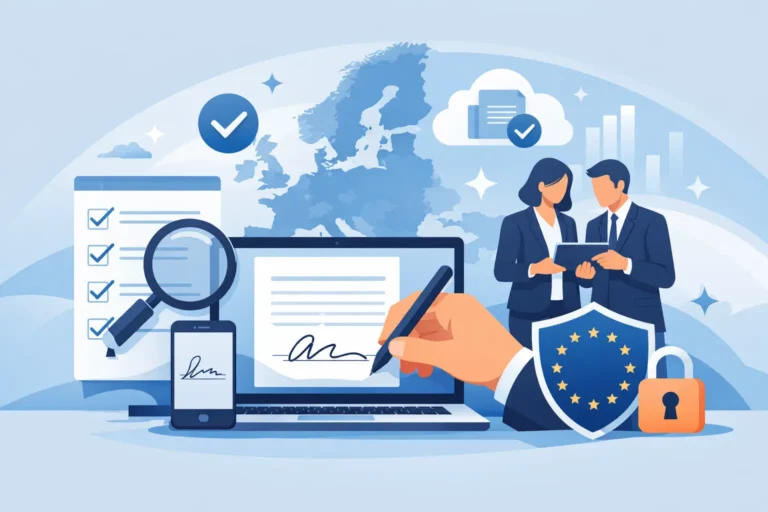
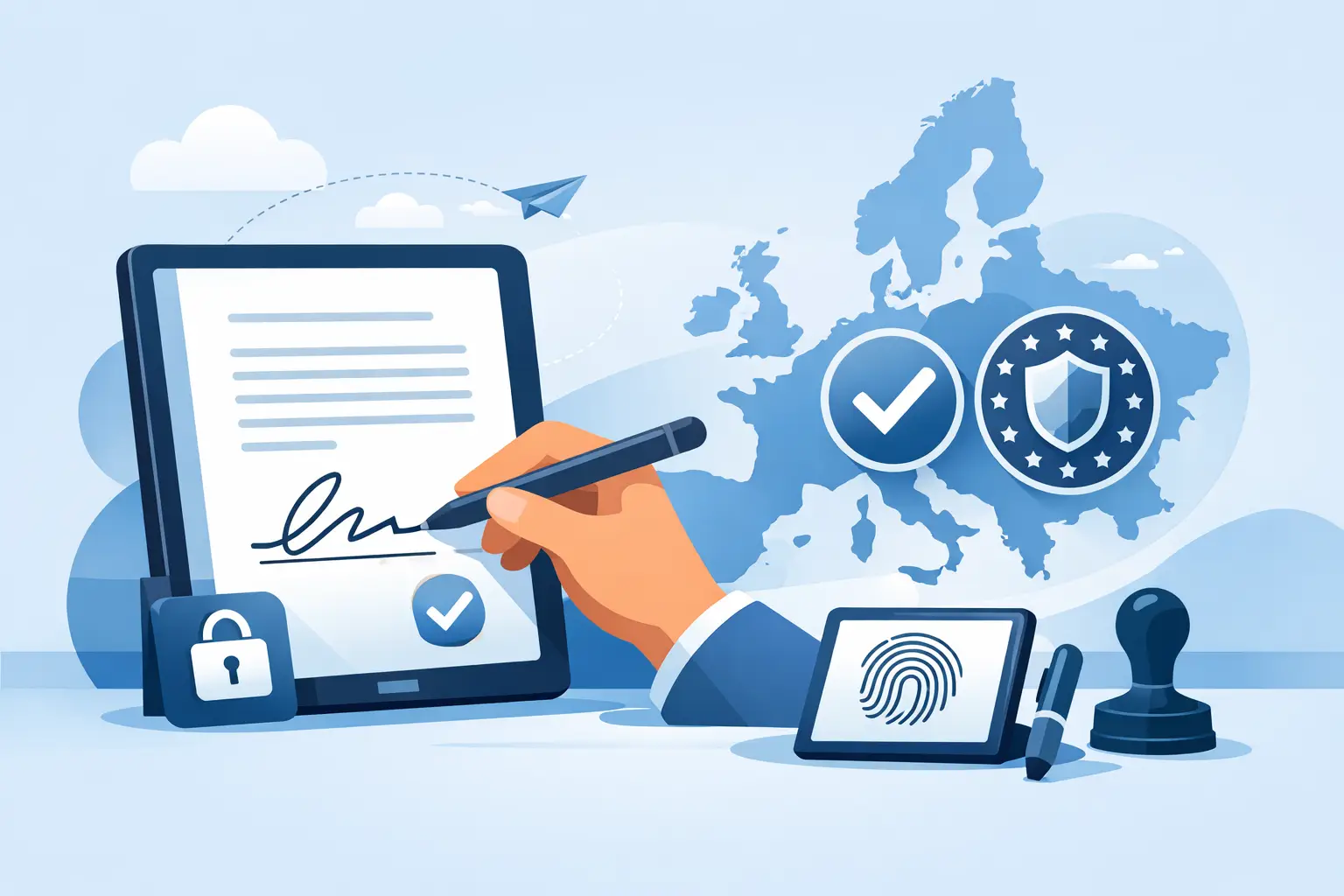
Yes. Across the EU, electronic signatures are recognised under the eIDAS Regulation, which created a common legal framework for electronic identification and trust services. That framework is what gives businesses a clearer basis for cross-border signing, rather than leaving everything to separate national rules.
The key principle is straightforward. An electronic signature cannot be denied legal effect purely because it is electronic. In other words, a contract does not become invalid simply because it was signed online rather than with pen and paper.
That said, eIDAS does not mean every electronic signature is equal. It sets out different signature levels, and those levels affect how easy it is to prove who signed, whether the document was altered, and whether the signature is suitable for higher-risk or regulated workflows.
For most businesses, that is the real issue. Legal validity is one thing. Being able to defend the signature if challenged is another.
The three types of electronic signature
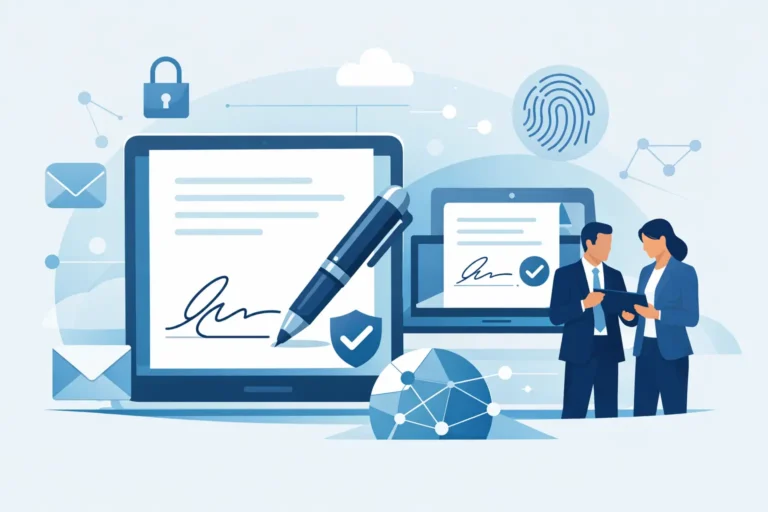
Under eIDAS, there are three main types of electronic signature: Simple Electronic Signature or SES, Advanced Electronic Signature or AES, and Qualified Electronic Signature or QES.
A Simple Electronic Signature is the broadest category. It can include typed names, tick-box consent, or a basic signature drawn on screen. SES is legally valid, and for low-risk documents it can be entirely appropriate. If you are sending internal approvals or routine commercial paperwork, it may be enough.
An Advanced Electronic Signature offers more assurance. It must be uniquely linked to the signer, capable of identifying them, and connected to the signed data in a way that reveals any later changes. In practice, AES is often the sensible middle ground for businesses that need stronger evidence without adding the friction or cost of qualified signing to every workflow.
A Qualified Electronic Signature is the highest level. It is an advanced signature created using a qualified signature creation device and backed by a qualified certificate from an approved trust service provider. Under eIDAS, a QES has the equivalent legal effect of a handwritten signature across all EU member states.
That does not mean every document needs QES. It means QES is the strongest option when you need the highest degree of legal certainty.
What “valid” actually means in practice
When businesses ask whether electronic signatures are valid in Europe, they usually mean one of three things. Is the signature legally recognised? Would it hold up if disputed? And is it appropriate for this specific document?
Those are related questions, but they are not identical.
SES, AES, and QES can all be legally valid. The difference is evidential strength and risk tolerance. If a customer later claims they never signed the document, a simple typed name may leave more room for argument than an advanced or qualified signature supported by identity checks, timestamps, certificates, and an audit trail.
This is why compliance-led teams should avoid reducing the decision to the cheapest or fastest option. The right signature type depends on the document value, the level of risk, the chance of challenge, and whether sector-specific rules apply.
When a simple signature is enough
For many everyday business processes, SES is acceptable. Think of routine sales agreements, internal acknowledgements, standard supplier documents, or lower-risk service terms. If the parties are identifiable, the intent to sign is clear, and the platform captures supporting evidence, a simple electronic signature can be a practical choice.
But “acceptable” does not always mean “best”. If the document has financial significance, long-term consequences, or a realistic prospect of dispute, stronger authentication and evidence are worth having.
A common mistake is treating all contracts as equal. They are not. A basic NDA and a multi-year commercial agreement do not carry the same exposure.
When AES makes more sense
Advanced Electronic Signatures are often the best fit for SMEs and professional teams that need a more defensible process without enterprise complexity. They add stronger linkage between signer and signature, better tamper evidence, and a more credible record if the signing event is ever questioned.
This is particularly useful for HR documents, client agreements, procurement paperwork, and recurring operational contracts where the volume is high but the need for legal assurance is also real. For these workflows, AES often offers the right balance between compliance and efficiency.
That balance matters commercially. If advanced signatures are priced per use, teams can end up rationing compliant workflows or falling back to weaker methods for cost reasons. A system built around routine use of AES is usually a better operational model for document-heavy businesses.
When QES is the safer route
Some documents justify the highest assurance level. QES is often chosen where national law, sector rules, or internal policy require stronger identity verification and a signature with the clearest legal standing.
This can apply in regulated sectors, higher-value agreements, formal corporate acts, or situations involving cross-border enforcement concerns. It can also be the right decision when one party explicitly requires qualified signing.
However, QES introduces more steps. Identity verification is typically stricter, and the signing process can take longer. That is the trade-off. You gain certainty, but you should use it where that certainty genuinely matters rather than forcing it into every workflow.
Are there any exceptions across Europe?
The eIDAS framework creates consistency, but document admissibility and formal requirements can still depend on local law and the nature of the transaction. Some legal acts may require notarisation, specific formalities, or other national procedures that an ordinary electronic signature process does not replace.
So while electronic signatures are broadly valid across Europe, you should not assume every document can be handled in exactly the same way in every jurisdiction. Property transactions, certain family law matters, and other formal acts may sit outside standard business signing workflows.
For ordinary commercial operations, though, the position is usually clear. Electronic signatures are widely usable and legally recognised. The question is less about permission and more about choosing the right level and evidence model.
What businesses should check before choosing a platform
A signing tool should do more than capture a squiggle on a PDF. If you operate in Europe, you should look for eIDAS-aware workflows, clear support for SES, AES, and where needed QES, plus strong audit evidence showing who signed, when, and what happened to the document.
Data handling also matters. For many organisations, especially those dealing with employee records, contracts, or regulated client documents, GDPR posture and data hosting location are not side issues. They are part of the compliance decision. European hosting and a transparent processing model can reduce unnecessary risk.
It is also worth checking whether the platform supports structured workflows such as signing sequences, templates, team access controls, status tracking, and document organisation. These are not cosmetic extras. They are what turns e-signing from a one-off task into a controlled business process.
For teams that send large volumes of agreements, efficiency features matter as well. Template-based sending, automatic field detection, and clear audit trails reduce admin time while keeping the signing process consistent. That is where a European platform such as Asignu can be attractive – it focuses on practical workflows and eIDAS-aligned compliance without loading smaller businesses with enterprise-style complexity.
The short answer for business teams
If you are asking whether electronic signatures are valid in Europe, the answer is yes. They are legally recognised under eIDAS and can be used across EU member states for a wide range of business documents.
But if you are asking whether any electronic signature is enough for every document, the answer is no. Some situations only need a simple signature. Others call for AES. And for the highest-assurance cases, QES is the better choice.
The sensible approach is to match the signature level to the legal and commercial risk of the document, then make sure your process captures evidence properly. That gives you what most businesses actually need – certainty, efficiency, and a signing workflow that does not create problems later.
The best signing process is not the one with the most features. It is the one that gives your team a clear, defensible way to get documents signed correctly the first time.