Guide to European Data Sovereignty
If your contracts, HR files and approval records sit in software governed outside Europe, data sovereignty stops being an abstract legal topic and becomes an operational risk. This guide to European data sovereignty is for teams that need practical clarity – not theory – when choosing systems for documents, signatures and business records.
For smaller businesses and growing organisations, the issue usually surfaces during procurement, a customer security review or a compliance audit. Someone asks where the data is stored, who can access it, which laws apply, and whether a non-EU parent company could still be compelled to hand information over. If the answers are vague, confidence drops quickly.
What European data sovereignty actually means
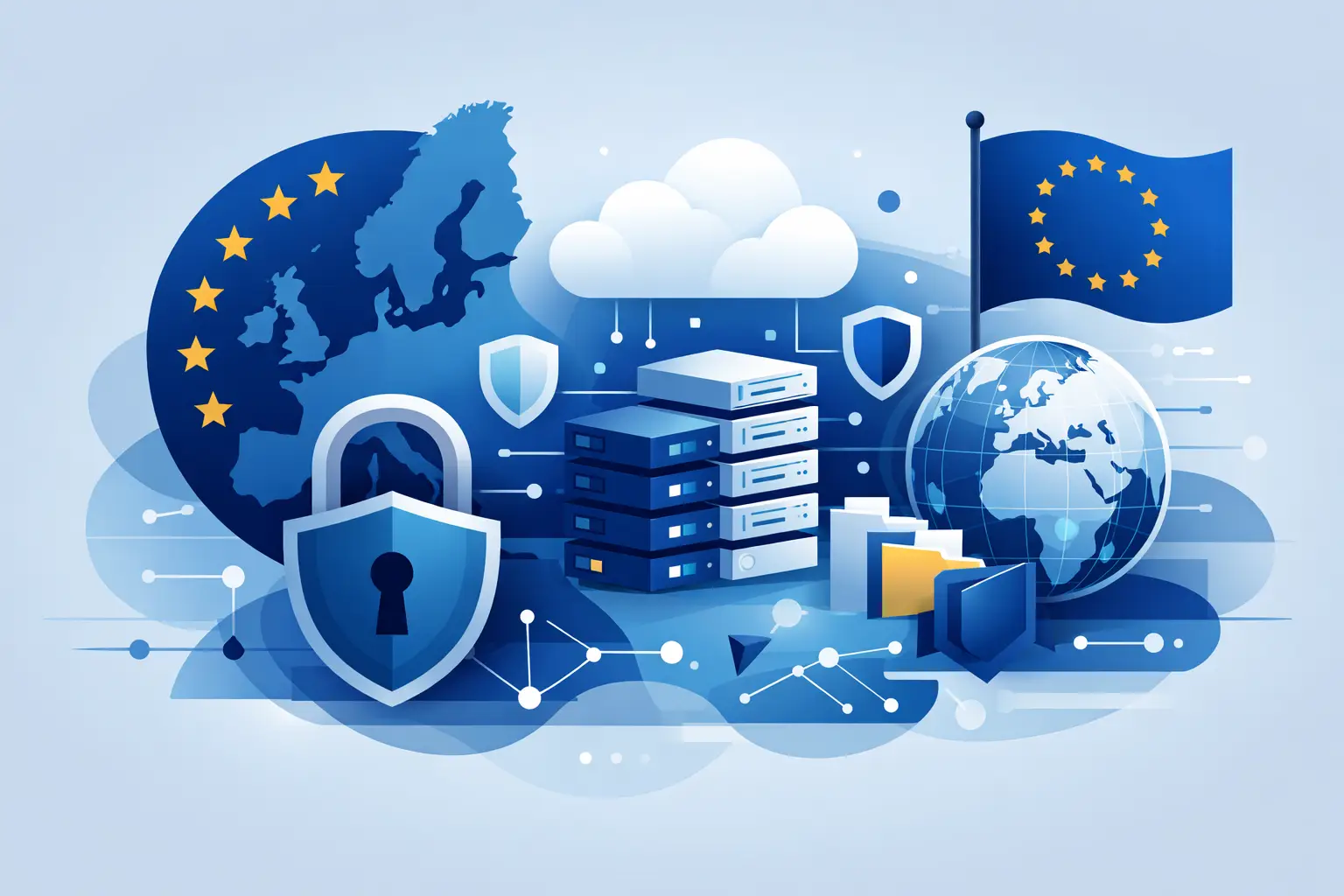
European data sovereignty is the ability to keep control over data under European rules, governance and infrastructure choices. That includes where data is hosted, which legal regime applies, who can administer systems, how transfers are handled, and whether foreign authorities may reach the data through non-EU jurisdiction.
It is closely related to data residency, but the two are not the same. Residency is about location. Sovereignty is about control. A provider can host data in the EU while still being subject to non-EU legal obligations, subcontractor chains or support access models that weaken that control.
That distinction matters for businesses signing supplier contracts, handling employee information or managing regulated records. If your document workflow contains identity data, salary information, client contracts or legal evidence, the question is not simply where the server is. It is whether your business can demonstrate a clear, defensible governance model around that data.
Why this matters beyond compliance teams
Many companies first hear about sovereignty from legal or IT, but the impact is wider. HR needs confidence that employment records are handled correctly. Finance wants predictable audit trails and retention practices. Operations teams need tools that are easy to deploy without creating policy exceptions. Founders and managers want to avoid buying software that becomes a procurement problem six months later.
There is also a commercial angle. More customers now ask vendors to explain hosting, subprocessors and transfer mechanisms before signing. For businesses selling into regulated sectors or larger enterprises, weak answers can slow deals or stop them altogether.
This is one reason European-first software choices have become more attractive. They reduce the amount of explanation required and make internal approvals simpler. That does not remove every compliance task, but it often reduces legal ambiguity.
A practical guide to European data sovereignty in software buying
When assessing any SaaS product, start with the legal and operational basics rather than the feature list. A polished interface means little if the provider cannot explain its control model clearly.
First, ask where customer data is stored in practice, not in marketing terms. You want to know the hosting region, backup locations and whether logs, attachments and metadata follow the same rule. Some providers store primary records in Europe but process support data or telemetry elsewhere.
Next, ask who the contracting entity is and which jurisdiction governs the service. This helps clarify whether the provider is genuinely built within a European legal framework or simply offering EU hosting as an option. It is not always a deal-breaker if a company has international operations, but it changes the risk picture.
Then look at access. Can support teams outside the EU reach customer data? Are administrative actions logged? Is access restricted by role and necessity? Sovereignty is weakened when broad internal access remains possible, even if storage stays in Europe.
Finally, review transfers and subprocessors. If a platform depends on a long chain of third-party services, your compliance burden rises. Each additional processor can introduce a new transfer question, contractual review or security assessment.
The specific issue with document and e-signature workflows
Document platforms deserve closer scrutiny because they often contain concentrated business risk. A single signed file may include names, addresses, compensation details, bank information, commercial terms and evidence of consent. Audit trails can add timestamps, IP data and signer activity history. In legal or HR workflows, that makes the platform more than a convenience tool – it becomes part of your compliance record.
This is where sovereignty and legal validity meet. For European businesses, eIDAS compliance and GDPR alignment are not separate topics. They shape whether a signature process stands up properly and whether the underlying data handling can be defended.
A platform designed around EU legal requirements tends to make this easier. It is more likely to offer clear signature types such as SES, AES and QES, maintain structured audit evidence, and keep hosting and governance aligned with European expectations. That is often more useful than broad feature volume.
What good looks like in practice
A strong sovereignty posture is usually visible in plain operational details. The provider can explain its hosting model without hesitation. Data processing terms are clear. Administrative access is restricted and traceable. Signature evidence is preserved in a way that supports legal use, not just user convenience.
You should also expect sensible workflow features that reduce risk at process level. Templates help standardise recurring documents. Signing sequences prevent the wrong person receiving the wrong file too early. Status tracking reduces the need to export files into email chains and shared drives. Structured document management lowers the chance of records being scattered across local folders.
These may sound like productivity features, but they are also control features. Businesses often create compliance risk through manual workarounds, not through formal policy decisions.
Trade-offs businesses should be honest about
There is no single sovereignty checklist that fits every organisation. A five-person consultancy and a cross-border healthcare supplier will not assess risk in the same way. The right answer depends on document sensitivity, customer expectations, procurement requirements and internal resources.
Some businesses need strict EU-only hosting and a clearly European provider because customer contracts demand it. Others may accept a broader model if encryption, contractual controls and internal policies are strong enough. The key is to decide consciously rather than assume all cloud tools are effectively the same.
There can also be cost and functionality trade-offs. Global platforms may offer wider integrations or more niche enterprise modules. European alternatives may feel narrower in scope, but often provide greater clarity on compliance, hosting and legal framing. For many SMEs, that is a worthwhile exchange because it removes complexity they did not need in the first place.
Questions to ask before you commit
A useful internal test is whether your team could answer a customer questionnaire tomorrow without scrambling. If not, ask vendors direct questions now. Where is all customer data stored, including backups and logs? Which entity provides the service? What subprocessors are involved? Can non-EU personnel access data? How are audit trails created and retained? Which signature standards are supported, and how do they align with eIDAS requirements?
If you handle higher-assurance workflows, ask about identity verification, qualified signatures and administrative controls as well. These are not specialist questions. They are standard buying questions for any business that treats document signing as a business-critical process.
Choosing simplicity without losing compliance depth
Many smaller organisations end up overbuying. They adopt complex platforms designed for enterprise transformation projects when what they really need is a clear, legally valid signing workflow with proper control over data. That usually leads to poor adoption, fragmented usage and avoidable cost.
A better approach is to choose software that handles the essentials well: compliant signatures, strong audit evidence, structured workflows, EU-centred governance and straightforward administration. Asignu is built around that model, giving European businesses a simpler route to legally valid signing without enterprise complexity or unclear hosting assumptions.
The wider point is this: sovereignty should support operations, not block them. If your platform choice gives you compliance confidence, clearer procurement answers and fewer manual workarounds, your teams move faster with less friction.
European data sovereignty is not about buying software for political reasons or chasing a slogan. It is about control, legal clarity and making sure the systems holding your most sensitive business documents are aligned with the way your organisation actually needs to operate. When that foundation is sound, signing, tracking and managing documents becomes much easier to trust.