Document Signing Workflow Software That Works
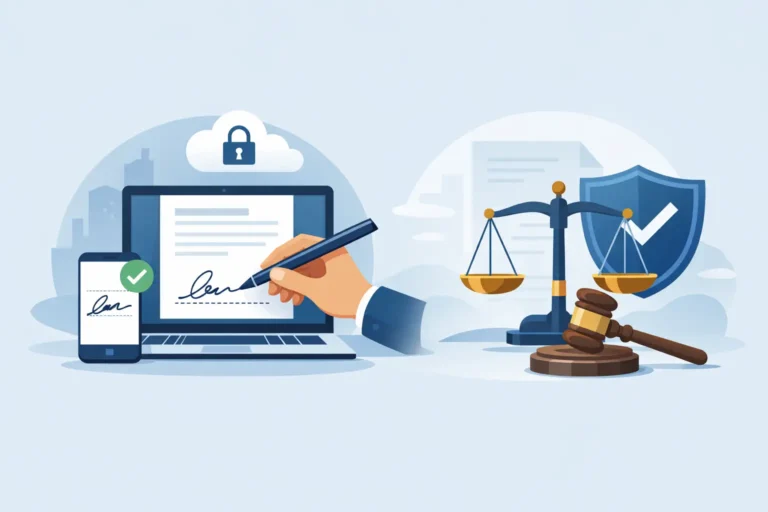
A contract sits in someone’s inbox for three days, not because anyone objects to it, but because the right person never saw it, the signer fields were wrong, and nobody can tell whether the latest version is the final one. That is the real problem document signing workflow software is meant to solve. Not just capturing a signature, but making the whole approval and signing process faster, clearer and legally dependable.
For small and mid-sized businesses, the pain usually appears in ordinary places. HR is sending offer letters manually. Finance is chasing approvals for supplier agreements. Operations is trying to keep track of who signed what and when. Legal wants an audit trail. Compliance wants certainty that the process stands up under scrutiny. When those needs are handled through email chains, shared folders and ad hoc PDF tools, friction builds quickly.
The best software does not add another layer of admin. It removes it. But that only happens if the platform is built around workflow, not just e-signatures.
What document signing workflow software should actually do
At a basic level, the software should let you send a document, place fields, request signatures and receive a completed file. That part is no longer difficult. The real difference appears when your process includes more than one signer, approval rules, recurring templates or legal requirements that vary by document type.
Good document signing workflow software gives structure to those moving parts. It lets you define signing order, assign internal approvers before external signers, reuse templates for repeat documents, track status in real time and keep a clear record of every action. Instead of treating each document as a one-off task, it turns document handling into a repeatable process.
That matters most in teams where paperwork is constant. If you send five contracts a month, almost any tool can feel adequate. If you send fifty, or if each one involves multiple stakeholders, a weak workflow becomes expensive very quickly. Delays, missed approvals, signature mistakes and poor record-keeping all carry operational cost. In some sectors, they carry legal risk as well.
Why simple e-signature tools often fall short
A lot of businesses start with the cheapest or easiest signature app they can find. That is understandable. The immediate need is often straightforward: get the document signed.
The problem comes later. You realise there is no sensible way to manage templates across teams. Advanced signatures cost extra every time you use them. Audit information is thin. The hosting model raises questions from legal or procurement. A multi-signer approval flow becomes awkward, so staff work around the system rather than through it.
This is where many companies get stuck between two poor options. On one side, lightweight tools that handle basic signatures but not regulated workflows. On the other, enterprise platforms packed with features most SMEs will never use, priced and configured as if every customer has a dedicated IT and legal team.
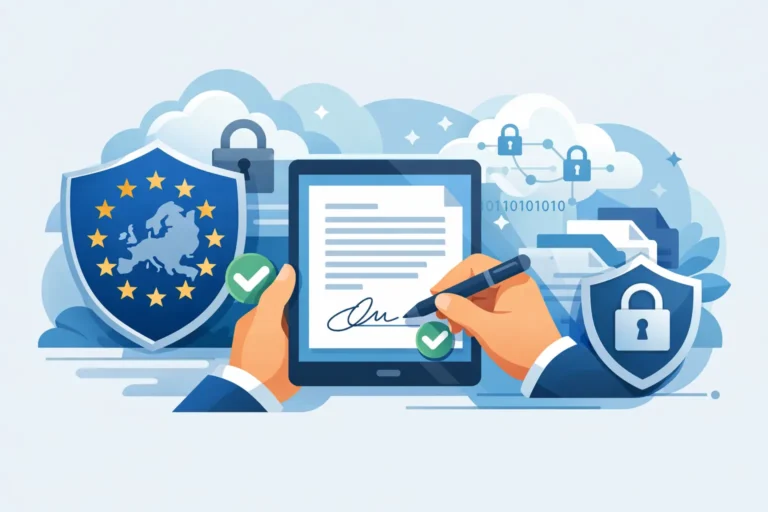
For European businesses in particular, there is another layer. Compliance is not a side issue. If documents need to be legally valid across EU member states, if data handling matters, or if your team needs confidence around eIDAS and GDPR, the platform needs to do more than look polished.
The features that make a real difference
When assessing document signing workflow software, it helps to ignore feature volume and focus on operational value.
Templates are one of the first things to look at. If your business repeatedly sends the same document types – employment contracts, NDAs, client agreements, onboarding packs, approval forms – reusable templates save time and reduce mistakes. Better still if the system can detect fields automatically and recognise where signatures should go, because that removes manual setup from routine sending.
Signing sequences are equally important. Some documents should not go to the client until an internal manager approves them. Others need two directors to sign before a vendor receives the final copy. A proper workflow tool should let you define that order clearly, without forcing users to improvise around the software.
Status tracking is another practical requirement rather than a nice extra. Teams need to know whether a document was sent, opened, signed, declined or is still waiting. Without that visibility, follow-up becomes guesswork. With it, bottlenecks are easier to spot and less time is wasted chasing the wrong person.
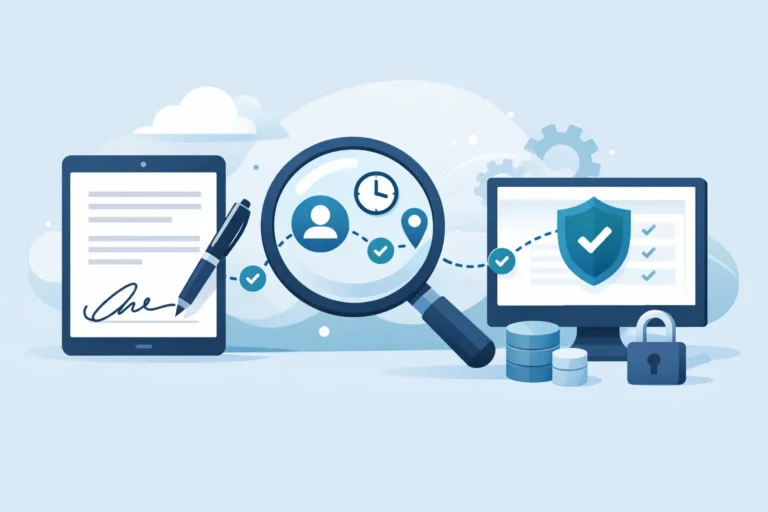
Then there is the audit trail. In regulated or disputed situations, it is not enough to have a signed PDF. You need evidence of the signing process itself – timestamps, participant actions, authentication details and a reliable record of what happened. That is part of what turns a convenient digital action into a defensible business process.
Compliance is not optional if you operate in Europe
For many buyers, this is the point where selection becomes more serious. Not every signature carries the same legal or evidential weight. Depending on the document and risk level, your team may need a Simple Electronic Signature, an Advanced Electronic Signature or a Qualified Electronic Signature.
If the platform cannot support the level you need, or makes advanced signing prohibitively expensive, you may end up using the wrong process for important documents. That creates risk quietly, which is often worse than obvious failure.
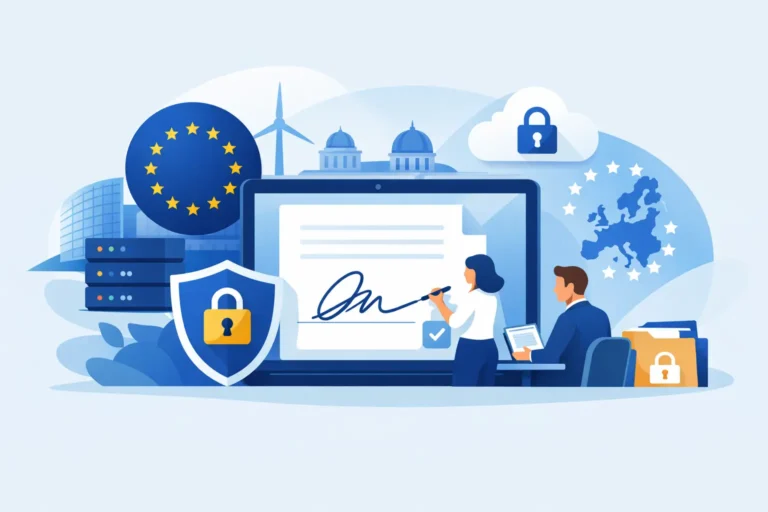
European businesses should look closely at eIDAS alignment, certificate handling, identity options and data hosting arrangements. GDPR-safe processing and EU-only hosting can be commercially and legally relevant, especially for professional services, HR, finance and compliance-led teams. These are not abstract procurement points. They affect whether internal stakeholders are comfortable approving the tool in the first place.
This is also why some businesses are moving away from global platforms designed primarily for broad market scale rather than European compliance depth. A simpler system can be the better choice if it covers the legal essentials properly and avoids charging punitive rates for the signature types you actually need.
How to judge whether the software fits your workflow
The quickest way to assess a platform is to map one real process, not an imagined ideal one. Take a common document flow – perhaps a sales agreement, a hiring document or a supplier contract – and ask a few direct questions.
How many people are involved before signature? Does the order matter? Do you need internal and external roles? Will this document be reused often enough to justify a template? Do you need AES or QES for some cases? Who needs visibility once it is sent? Where should the final document and audit evidence live?
If the software handles that process cleanly, it is probably a strong fit. If you can already see workarounds during the trial, those workarounds will multiply after rollout.
Ease of adoption matters too. The best workflow design on paper is useless if everyday users avoid it. Operations teams, HR coordinators and finance staff need a system that feels clear on first use. That usually means predictable steps, sensible defaults and no unnecessary enterprise complexity.
Cost matters, but pricing structure matters more
Businesses often compare subscription fees first. That is sensible, but incomplete. The bigger issue is how the platform charges for the workflows you actually run.
A low headline price can become expensive if advanced signatures are billed per use, if template access is restricted to higher tiers, or if basic administrative control is locked behind enterprise plans. For document-heavy teams, those limits show up quickly.
That is why transparent pricing often beats nominally cheaper pricing. If your business depends on frequent signed documents, predictable costs are part of operational control. In that context, offerings such as unlimited Advanced Electronic Signatures can be more useful than a lower entry point with hidden usage pressure. For many growing teams, that model is easier to budget and easier to scale.
Where software should stay simple
There is a temptation in this category to equate more features with better capability. Usually that is not true. Most SMEs do not need sprawling contract lifecycle systems, complex implementation projects or a platform that takes weeks to configure before anyone can send a document.
What they do need is clarity. A straightforward way to prepare documents, route them correctly, secure the right level of signature, track progress and store evidence. If a system can do that well, it will outperform more complicated software that creates friction at every step.
That is where a European platform such as Asignu fits naturally for many teams – especially those that want legal certainty, EU-focused compliance and practical workflow tools without enterprise bloat.
Choosing document signing workflow software is less about buying another app and more about deciding how your business wants paperwork to move. The right system should make that movement easier to trust, easier to manage and much less likely to stall when someone is waiting for a signature.