EU Hosted E Signature Software That Fits
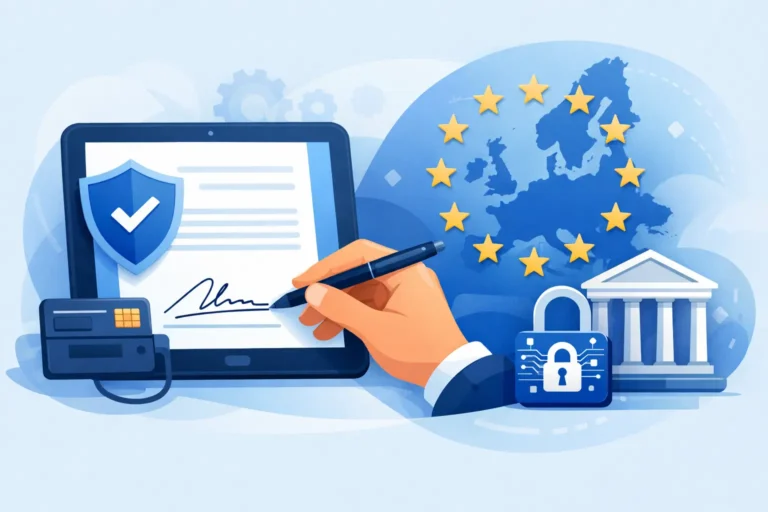
A contract is ready to go, the client wants it signed today, and then the awkward question lands: where is the data actually stored? For many teams, that is the moment EU-hosted e-signature software stops being a procurement detail and becomes a real operational requirement.
If you work in HR, finance, legal, operations or compliance, this is rarely just about collecting a signature. It is about proving who signed, protecting personal data, meeting internal policy, and avoiding a tool that creates more admin than it removes. That is why the hosting model matters just as much as the signing experience.
Why EU-hosted e-signature software matters
There are plenty of signing tools on the market, but not all of them are built for European regulatory expectations. Some are designed first for a US market and adapted later. Others are full of enterprise features that look impressive in a sales demo but slow down day-to-day work.
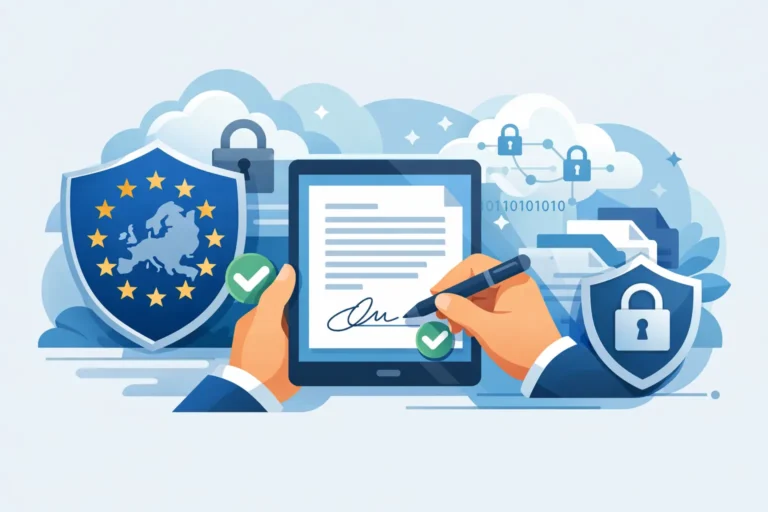
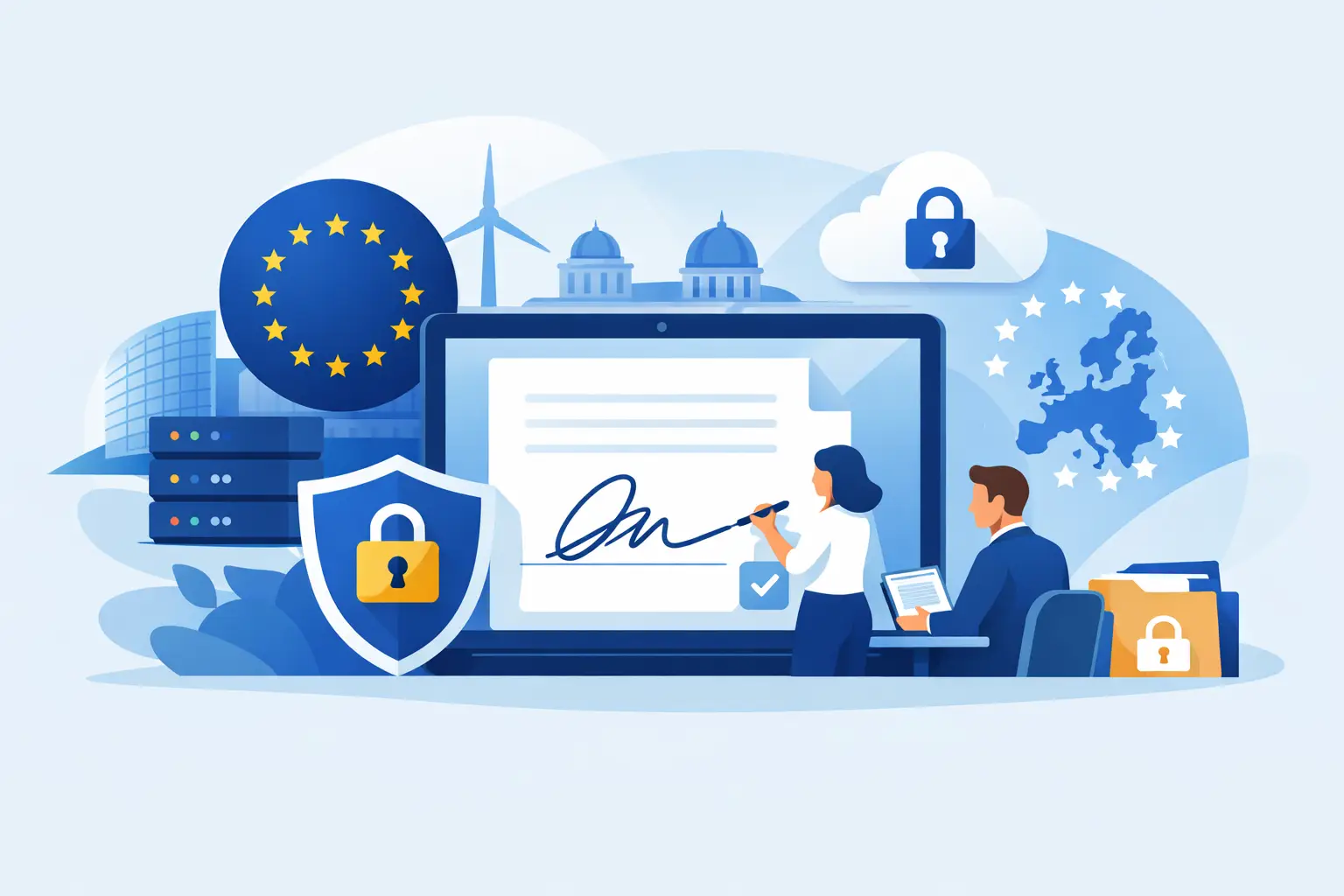
EU-hosted e-signature software matters because it addresses three concerns at once: legal validity, data sovereignty and practical control. If your documents include employment contracts, NDAs, supplier agreements, onboarding packs, invoice approvals or regulated client forms, you need confidence that the platform aligns with GDPR expectations and European legal frameworks.
Hosting data in the EU does not solve every compliance issue by itself, but it reduces complexity. It gives teams clearer answers when customers, auditors or internal stakeholders ask where documents and personal data are processed. For many organisations, that clarity is valuable in its own right.
What buyers often get wrong
A common mistake is assuming that all e-signatures carry the same legal weight. They do not. Under eIDAS, different signature types serve different use cases, and choosing the wrong one can create unnecessary risk or unnecessary cost.
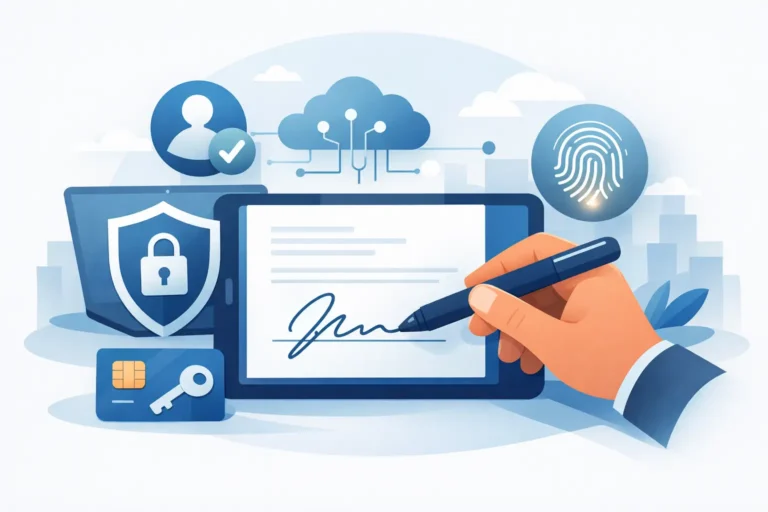
A Simple Electronic Signature may be enough for many low-risk approvals. An Advanced Electronic Signature offers a stronger level of identity linkage and evidential value. A Qualified Electronic Signature goes further again and is suitable where the highest level of assurance is needed. The right choice depends on the document, the level of risk, and the standards your organisation needs to meet.
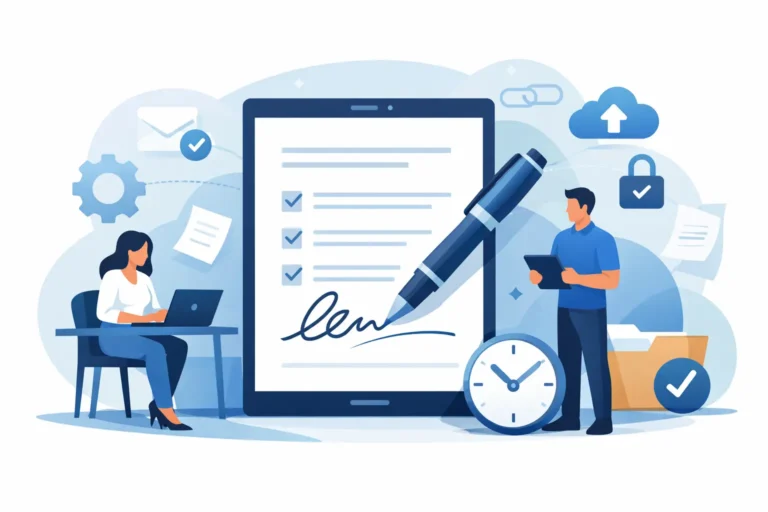
Another mistake is focusing only on the signature itself and ignoring the workflow around it. A valid signing process is not just a squiggle on a PDF. It includes audit trails, timestamps, signer authentication, document integrity, status visibility and a clear record of what happened and when. Without that structure, teams often end up chasing documents manually and reconstructing the process after the fact.
What good EU-hosted e-signature software should include
The strongest platforms are not necessarily the ones with the longest feature list. They are the ones that handle the daily volume of document work cleanly, while also supporting higher-assurance signing when needed.
For most SMEs and growing teams, that means starting with the basics done properly. You should be able to upload documents, place fields quickly, send to one or more signers, define signing order and track progress without training sessions or technical workarounds. If templates are part of the product, repeat documents such as offer letters, contractor agreements or approval forms become much faster to process.
Beyond that, the compliance layer matters. Look for support for eIDAS-aligned signature types, especially if you need to move beyond the simplest cases. Clear audit evidence, tamper-evident document handling and options for identity verification are worth far more than cosmetic extras.
AI features can help too, if they are used to remove admin rather than create confusion. Automatic field detection and signature detection are useful because they shorten setup time on recurring documents. That matters when your team sends dozens or hundreds of forms each month and wants consistency without manual placement every time.
Data sovereignty is only part of the picture
Some buyers stop at “hosted in the EU” as if that settles the matter. It helps, but it is only one part of the decision.
You still need to ask how the provider handles access control, auditability, user permissions and retention. You need to know whether the software supports the kinds of signature workflows your documents require. You also need to understand the pricing model, because compliance can become expensive very quickly if every advanced signature is charged as an add-on.
This is where trade-offs appear. A very low-cost tool may be fine for occasional informal use, but it can become poor value if your team needs better evidence, structured workflows or repeatable templates. At the other end, an enterprise platform may offer everything under the sun but saddle a smaller organisation with complexity, long onboarding and fees tied to features it will never use.
How to evaluate EU-hosted e-signature software in practice
Start with your documents, not the vendor pitch. List the agreements and forms your team sends most often. Then separate them into low, medium and high-assurance categories. This usually reveals that not every document needs the same level of signing.
Once you know that, check whether the platform can support Simple, Advanced and, where needed, Qualified Electronic Signatures in a way that fits your process. The key question is not whether a provider can technically offer QES. It is whether the tool makes it practical to use the right level of assurance without turning every send into a project.
Next, look at workflow speed. Can regular documents be turned into templates? Can you set signing sequences for internal approval and external signature? Can teams see status at a glance instead of asking by email? Can documents be stored in a structured way so they are not lost across inboxes and shared drives?
Then assess administration. Multi-user teams need role control, shared visibility and a sensible way to organise sent and completed documents. Finance may need quick access to signed order forms. HR may need traceable employee documents. Legal may need a reliable audit trail. If each team has to build its own workaround, the software is not solving the real problem.
Finally, test the commercial model carefully. Some providers look affordable until you add advanced signatures, identity verification, API access or support. For document-heavy businesses, usage-based pricing can become difficult to forecast. A subscription model with clearer limits is often easier to manage and justify internally.
The case for simpler compliance-led tools
There is a growing gap in the market between basic signing tools and heavyweight enterprise suites. Many European businesses sit in the middle. They need legal certainty, GDPR-aware handling and dependable workflows, but they do not need months of implementation or a platform built mainly for global corporations.
That is why simpler, compliance-led tools are gaining traction. They focus on what business teams actually need: legally valid signatures across EU member states, EU-only hosting, practical document tracking, and features that speed up repeat work rather than add another settings menu.
A platform such as Asignu fits this model well. It is built around straightforward European signing workflows, with eIDAS-compliant support for SES, AES and QES, while avoiding the enterprise bloat that often makes adoption harder than it should be. For teams that send documents regularly, features such as templates, signing order, audit trails, AI field detection and structured document organisation make a measurable difference.
One particularly important point for cost-conscious buyers is how advanced signatures are handled. If AES is central to your process, charging per use can quickly distort the economics. A provider that includes unlimited Advanced Electronic Signatures in its pricing can be a much better operational fit for SMEs and growing organisations.
When EU hosting is a deciding factor
There are situations where EU hosting moves from “preferred” to non-negotiable. Public sector suppliers, regulated services, cross-border professional firms, and businesses handling sensitive employee or customer data often face internal or contractual requirements around where data is stored and processed.
Even where there is no hard rule, buyer expectations have shifted. More customers now ask direct questions about hosting, subprocessors and legal framework. Choosing software built around European compliance makes those conversations easier. It gives your team firmer ground when procurement or legal review starts asking for specifics.
That does not mean every company needs the most advanced setup from day one. But if your business is growing, choosing a platform that can support stronger assurance levels later is usually wiser than starting again after twelve months.
What a good decision looks like
The right tool should feel boring in the best possible sense. Documents go out quickly, signatures come back without friction, audit evidence is available when needed, and nobody has to become an expert just to send a contract.
If you are comparing providers, look past the headline claims. Ask whether the software is genuinely built for European compliance, whether the hosting model supports your data requirements, and whether the workflow fits the way your team already works. Good EU-hosted e-signature software should reduce uncertainty, not add another layer of it.
The best choice is usually the one that gives you enough legal assurance for the documents you handle, enough structure for the team you have, and enough simplicity that people actually use it properly.