When Is QES Required in the EU?
A supplier wants your contract signed today. HR needs an employment document approved before a new starter begins. Legal is asking whether a standard electronic signature is enough, or whether this is one of those cases where a qualified electronic signature is mandatory. That is usually the real question behind when is QES required – not theory, but risk, enforceability and whether the document will stand up when it matters.
For most businesses, QES is not required for every agreement. In fact, many commercial documents can be signed perfectly well with a lower level of electronic signature. But there are situations where QES is either legally required by local law, strongly expected by regulators or counterparties, or simply the safest route because the stakes are too high to leave room for doubt.
When is QES required under eIDAS?
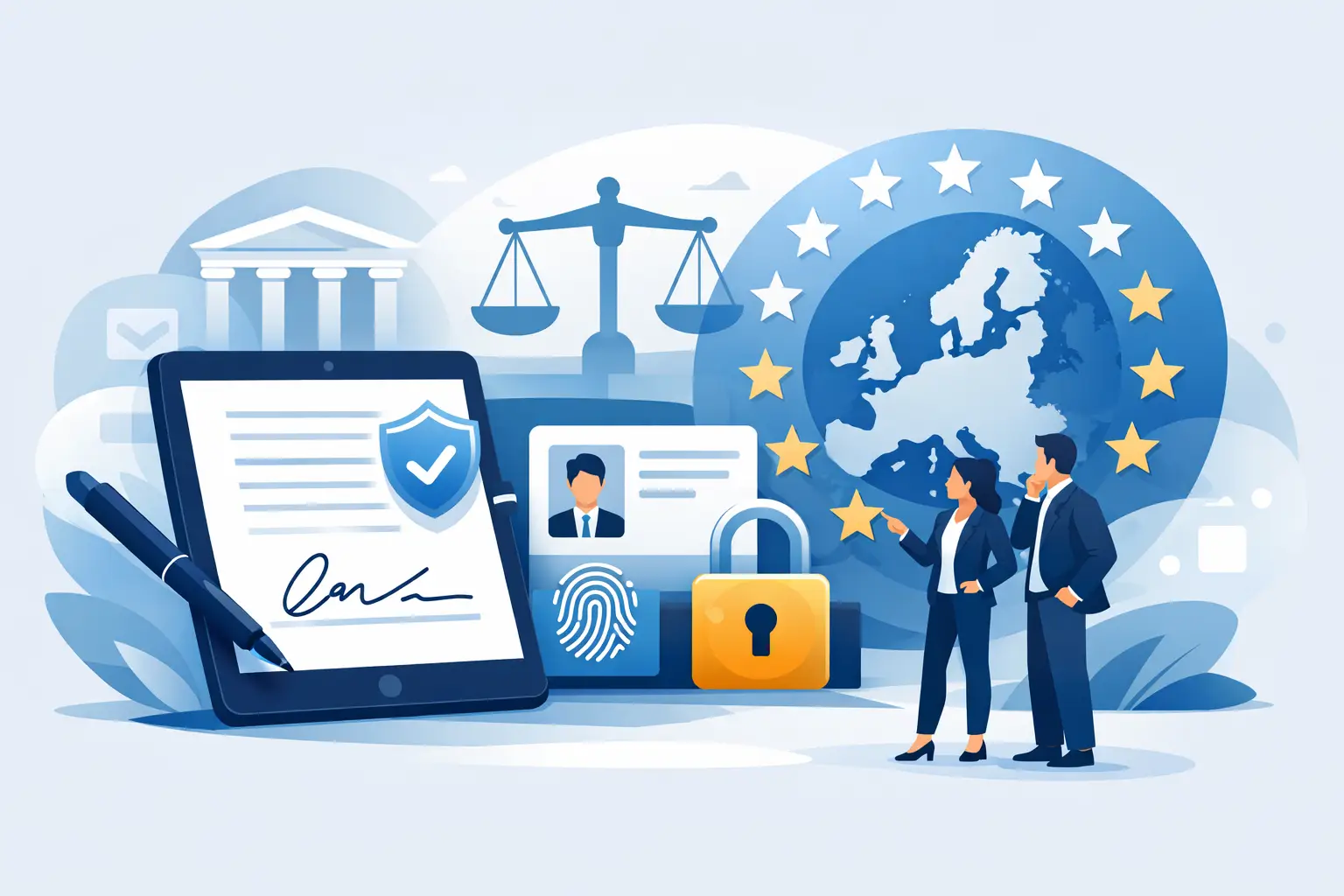
Under eIDAS, a qualified electronic signature has the highest legal standing. It is the only type of electronic signature that is explicitly given the equivalent legal effect of a handwritten signature across all EU member states. That does not mean every document needs one. It means that where the law requires the equivalent of a handwritten signature in electronic form, QES is the clearest route to meeting that standard.
This is where businesses often get confused. eIDAS creates the framework for electronic signatures, but it does not itself say that every employment contract, supplier agreement or board resolution must use QES. The real answer depends on the type of document, the national law that applies, and sometimes the expectations of the institution receiving it.
In practical terms, QES is usually required or worth serious consideration in three situations. First, where a specific law or regulation says a qualified signature is needed. Second, where the document must meet a formal written-signature requirement in a high-assurance digital context. Third, where the commercial or legal risk is significant enough that the extra identity assurance is justified.
The documents and situations where QES is often required
Some of the clearest examples sit in regulated or formal legal processes. Filings with public authorities, court-related procedures, notarial interactions, certain tax or procurement processes, and some highly regulated financial or corporate filings may require QES or an equivalent recognised national mechanism. This varies by country, so a business operating across Europe should never assume the rule is identical everywhere.
Real estate, company law and employment are also areas where caution is sensible. Not every property or corporate document requires QES, but some do, especially where national law imposes stricter form requirements. In some jurisdictions, shareholder resolutions, powers of attorney, articles amendments or registration filings may call for a higher level of signature assurance. Likewise, some employment documents can be handled with AES or SES, while others benefit from QES because they may later be challenged on identity, consent or timing.
The same applies to finance and compliance-heavy sectors. If you are handling loan agreements, guarantees, regulated onboarding forms or documents tied to anti-money laundering obligations, the issue is not only whether QES is legally mandatory. It is also whether your internal controls, auditors or counterparties will treat anything lower as insufficient.
When QES is not legally required but still makes sense
A lot of businesses ask the wrong question. They ask only, “Is QES mandatory?” A better question is, “What level of signature assurance do we need for this workflow?”
If you are signing a routine NDA with a known supplier, QES may be excessive. If you are finalising a director guarantee, a cross-border corporate resolution or a document likely to be relied on in a dispute, the higher assurance can be worth it even if the law does not strictly demand it.
That is because QES is not only about legal form. It also gives stronger evidence around signer identity and signature integrity. The signature is backed by a qualified certificate and created using a qualified signature creation device or service. For teams managing large volumes of important paperwork, that can reduce ambiguity later.
In practice, businesses often choose QES when there is cross-border complexity, a valuable transaction, an elevated risk of challenge, or a recipient who will scrutinise the signature process closely. It is often a risk-management decision as much as a legal one.
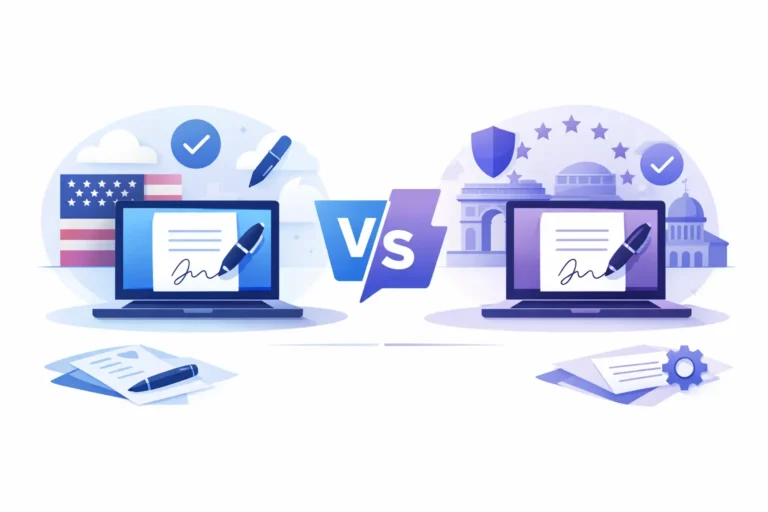
When is QES required compared with AES or SES?
This is where operational teams need clarity. SES, AES and QES are not interchangeable labels. They sit at different assurance levels.
A simple electronic signature, or SES, can be as basic as clicking to sign or typing a name. It is widely used and can still be legally valid, but it carries less evidential weight if challenged.
An advanced electronic signature, or AES, links the signature to the signer, helps detect changes to the signed document and offers stronger traceability. For many business agreements, AES is the practical middle ground. It is often enough for commercial contracts, internal approvals, procurement documents and HR workflows, especially where the process includes a reliable audit trail.
QES goes further. It adds a qualified certificate issued by a qualified trust service provider and is subject to stricter identity assurance requirements. If a law, regulator or public body expects the digital equivalent of a handwritten signature with the strongest presumption of validity, QES is usually the answer.
So when is QES required instead of AES or SES? Usually when the formality threshold is higher, when external scrutiny is expected, or when national rules point in that direction. If those factors are absent, AES is often more proportionate.
The practical test for businesses
Rather than treating every document as a legal research exercise, it helps to apply a simple internal test.
Start with the document type. Is this a routine operational agreement, or something tied to statutory form requirements, governance, finance or regulatory submission? Then look at jurisdiction. If the document is governed by the law of a particular EU country, check whether that country imposes any formal signature rules. After that, consider the counterparty and the consequences of challenge. If the other side, an authority or a court may later question identity or validity, a stronger signature method becomes more attractive.
This is also where process design matters. Many teams waste time by pushing QES into every workflow. That slows down signing, increases cost and creates friction for signers who do not need that level of identity verification. The better approach is to reserve QES for the documents that justify it and use AES for the larger volume of everyday business paperwork.
That balance is especially important for SMEs and growing organisations. You want legal certainty, but you do not want enterprise complexity. A sensible signature policy should match the assurance level to the document risk, not apply the highest level by default.
Common mistakes when deciding if QES is needed
One common mistake is assuming that “electronic signature” means one thing. It does not. If someone says a document can be signed electronically, that still leaves open whether SES, AES or QES is appropriate.
Another is relying on broad statements like “QES is always required for legal validity”. That is simply not true. Many documents are legally valid with SES or AES. The issue is whether they meet the relevant evidential and formal requirements for that specific use case.
A third mistake is ignoring local law. eIDAS provides the shared EU framework, but national rules still matter for document form, filing requirements and sector-specific procedures. A contract signed in one member state may be straightforward with AES, while the same type of document in another setting may need QES.
Finally, some businesses overcorrect and insist on QES for everything. That may feel safer, but it can make adoption harder, especially for customers, employees or partners who need a fast and simple signing experience.
A sensible approach to QES in daily operations
For most organisations, the right answer is a tiered signing policy. Use SES for low-risk acknowledgements and lightweight approvals. Use AES for the majority of commercial, HR and operational documents where you need stronger evidence and auditability. Use QES for high-risk, formally sensitive or specifically regulated documents.
That approach gives you control without creating unnecessary friction. It also aligns better with how businesses actually work. Most teams do not need every document treated like a court filing, but they do need confidence that the important ones are signed to the right standard.
If your business regularly handles regulated workflows, cross-border agreements or formal filings, it is worth using a platform that can support all three signature levels within one process. That makes it easier to standardise decisions, maintain audit trails and avoid the usual patchwork of separate tools and manual checks. For European businesses that want that balance, Asignu is built around exactly that kind of practical compliance.
The useful question is not whether QES is the best signature in the abstract. It is whether this document, in this jurisdiction, for this purpose, needs that level of assurance. Once you frame it that way, the decision becomes far more manageable.