Advanced electronic signature software explained
A supplier contract stalls because one signer used the wrong signature level. An HR pack sits untouched because the sequence was set up badly. Finance exports another audit trail by hand because the signing tool does not fit the approval process. This is usually the point where businesses stop asking for a basic e-signature tool and start looking for advanced electronic signature software.
For European businesses, that shift is not about chasing more features for the sake of it. It is about legal certainty, operational control and making sure document workflows stand up to scrutiny when the stakes are higher. If your team handles contracts, onboarding, approvals, account opening, regulated paperwork or recurring client documents, the software choice matters well beyond the signature box.
What advanced electronic signature software should actually do
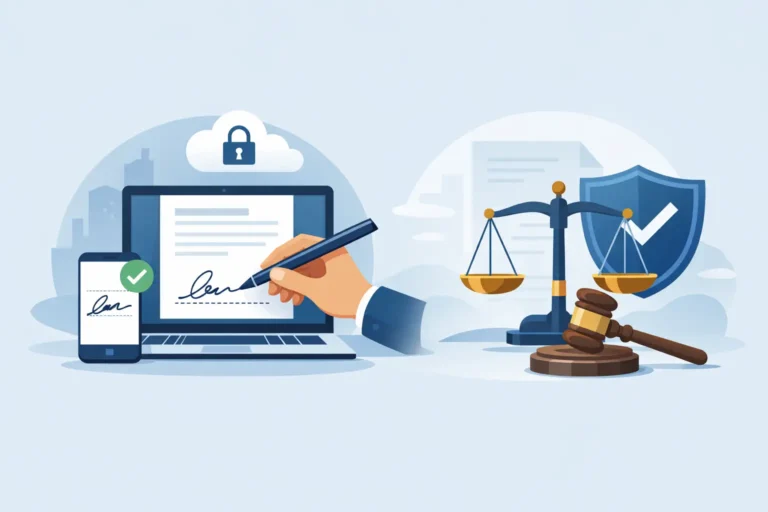
A lot of platforms talk about speed and convenience. Those things matter, but they are only part of the picture. Advanced electronic signature software should help you prove who signed, protect the integrity of the document and create a traceable record of the process. In the EU context, that means understanding how the signing workflow supports eIDAS requirements rather than treating compliance as an afterthought.
An advanced electronic signature, or AES, is more than a click-to-sign action. It is designed to be uniquely linked to the signer, capable of identifying that signer, and connected to the signed data in a way that reveals later changes. In practice, that means the software needs to support stronger identity assurance, dependable audit records and document protection that can hold up in a business or legal review.
That does not mean every company needs the most complex setup available. It means the software should give you the right level of assurance for the document type, without forcing enterprise overhead onto everyday teams.
Why basic e-signing often stops being enough
For simple internal approvals, a lightweight signing tool may do the job. But once documents affect employment, payments, supplier risk, regulated customer relationships or cross-border transactions, the weaknesses show up quickly.
One common issue is poor traceability. If you cannot clearly see who received a document, when they opened it, what authentication step they completed and whether the document changed afterwards, you are left filling gaps manually. That creates risk and wastes time.
Another problem is pricing that punishes higher-assurance use. Many providers treat advanced signatures as a premium event billed per send or per signature. That can make compliant usage feel unpredictable, especially for HR, legal or operations teams sending documents every week. Businesses then end up reserving AES for only a small subset of cases, even when a stronger standard would be sensible.
There is also the issue of data location and compliance expectations. European businesses are paying far closer attention to GDPR handling, hosting location and processor arrangements than they were a few years ago. If your signing platform is vague about where data is stored or how it supports EU legal requirements, that is not a minor detail.
What to look for in advanced electronic signature software
The best platforms are not the ones with the longest feature list. They are the ones that make compliant signing easier to run at scale.
eIDAS alignment and signature options
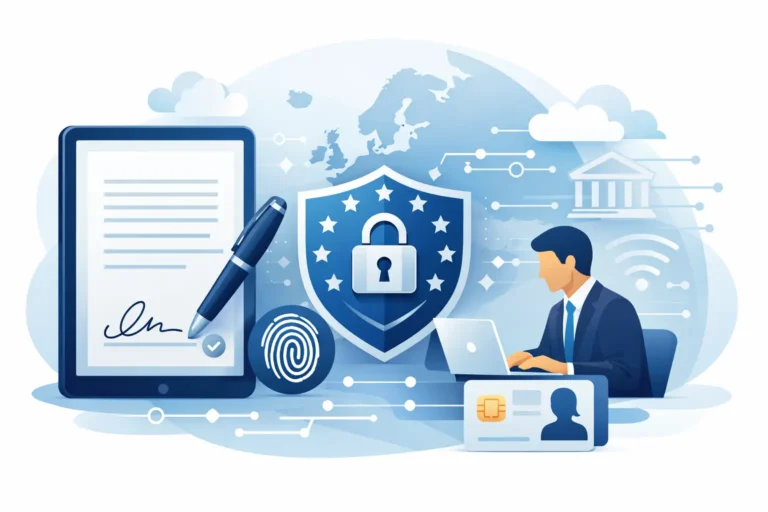
If you operate in the EU, the first check is simple. Does the platform clearly support the signature levels you may need, including SES, AES and, where relevant, QES? A business does not always need qualified signatures, but it should not be forced to change systems when higher assurance becomes necessary.
A useful platform lets teams apply the right signature type to the right workflow. Employment contracts, procurement documents and client agreements do not always carry the same legal or operational risk. The software should reflect that reality.
Strong audit trails
A signature is only part of the evidence. You also need a clear audit trail showing the full lifecycle of the document. That includes who sent it, who viewed it, who signed it, which authentication steps were used, timestamps and final status.
This matters for disputes, but it also matters for day-to-day administration. Good auditability reduces back-and-forth between teams and gives compliance, HR and finance a reliable record without manual reconstruction.
Structured workflows for real teams
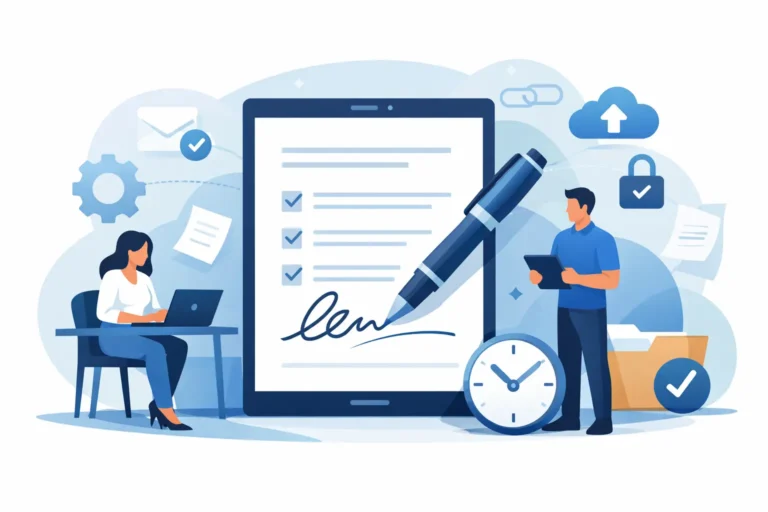
Business documents rarely move in a straight line. One signer may need to act before another. Internal approval may be required before external signature. Some forms need a witness, others need a manager and a client in sequence.
Advanced electronic signature software should handle signing orders, shared access, status tracking and reusable workflows without becoming difficult to configure. If every non-standard process needs support intervention, the tool is not saving much time.
Template and field automation
Recurring paperwork is where efficiency gains become obvious. Templates cut down repetitive setup, reduce errors and help standardise what goes out to clients, candidates or suppliers. AI-assisted field detection can speed this up further, especially for teams processing large volumes of existing documents.
This is not just about convenience. Standardised templates improve control. They make it less likely that a key field is missed or that different team members send slightly different versions of the same document.
EU hosting and GDPR clarity
For many organisations, this has moved from nice-to-have to mandatory. If you are handling personal data, commercial agreements or regulated records, you should know where your documents are stored and under which legal framework they are processed.
A provider with EU-only hosting and a clear compliance position gives procurement, legal and data protection stakeholders fewer reasons to hesitate. It also reduces the friction that often appears late in the buying process when security and compliance teams start asking basic but necessary questions.
The trade-off between power and complexity
There is a persistent assumption in software buying that more capability means more value. In practice, many SMEs and growing teams end up overbuying. They adopt a platform built for global enterprise procurement and then spend months working around complexity they never needed.
That is especially common in e-signature software. Large vendors often support every imaginable use case, but the trade-off is bloated setup, confusing pricing and workflows that require specialist administration. For a mid-sized HR team or an operations manager trying to speed up approvals, that complexity becomes a cost.
The better question is not whether a platform can do everything. It is whether it can handle your actual signing requirements with enough compliance depth and without making everyday usage harder. A straightforward European platform can be a better fit than a heavyweight market leader if it covers the legal and operational essentials cleanly.
When AES is the sensible middle ground
Not every document needs QES. Not every workflow should rely on the lowest-friction signature option either. AES often sits in the practical middle ground for businesses that need stronger legal assurance without turning every signing event into a full identity ceremony.
That makes it particularly relevant for employment documents, supplier agreements, onboarding packs, financial approvals and other business records where proving signer identity and document integrity matters. The exact requirement depends on the jurisdiction, the document category and your own risk policy, but AES is often where teams land when they want a stronger standard that is still workable at scale.
For organisations sending a high volume of these documents, pricing becomes a strategic issue. If advanced signatures are charged as exceptions, teams use them sparingly. If they are included predictably, the business can standardise workflows properly. That is one reason unlimited AES is such a practical differentiator for document-heavy teams.
A practical way to assess software before you buy
Start with the documents, not the demo. List the agreements, forms and approval flows your team sends most often. Then separate them into low, medium and high assurance categories. This immediately tells you whether you need simple signing, advanced signatures, qualified signatures or a mix.
Next, check how the platform handles recurring work. Can you create templates? Can you set a signing order? Can teams track status without chasing by email? Can administrators find completed documents quickly and export evidence when needed?
Then look at the compliance side. Is the provider clear about eIDAS support, data hosting, GDPR handling and identity options? If those answers are hidden behind vague marketing language, expect problems later.
Finally, look at the commercial model. If your team sends documents constantly, usage-based charging for advanced features can become expensive fast. Predictable pricing is not just a finance preference. It affects whether teams actually use the compliant workflow they were meant to adopt.
For many European SMEs, this is where a platform like Asignu makes sense – no enterprise complexity, legally valid across all EU member states where applicable under eIDAS, and built for clarity and ease of use rather than feature theatre.
Advanced electronic signature software is really a workflow decision
Buying signing software is often framed as a legal or IT purchase. In reality, it is an operations decision with compliance consequences. The right platform reduces delays, standardises recurring paperwork and gives your team confidence that signed documents are properly handled from send to storage.
If your current process still depends on inbox chasing, manual filing and uncertainty over which signature level to use, the issue is not just speed. It is control. The best systems fix that quietly, by making the correct process the easy one.
Choose software that fits the way your business actually works, respects European compliance requirements and removes friction rather than adding a layer of admin. When document signing is handled properly, the whole workflow gets lighter.