Digital Contract Workflow for Accountants
When a client engagement letter sits in someone’s inbox for a week, the delay is rarely about the legal work. It is usually a workflow problem. A digital contract workflow for accountants fixes that by turning a stop-start signing process into a controlled sequence with clear ownership, status tracking and legally valid signatures.
For accountancy firms and in-house finance teams, contracts are not just paperwork. They set scope, fees, responsibilities, data handling expectations and approval rights. If those documents are still being sent as attachments, printed for signature or chased manually, the cost shows up in slower onboarding, inconsistent records and unnecessary compliance risk.
What a digital contract workflow for accountants should actually do
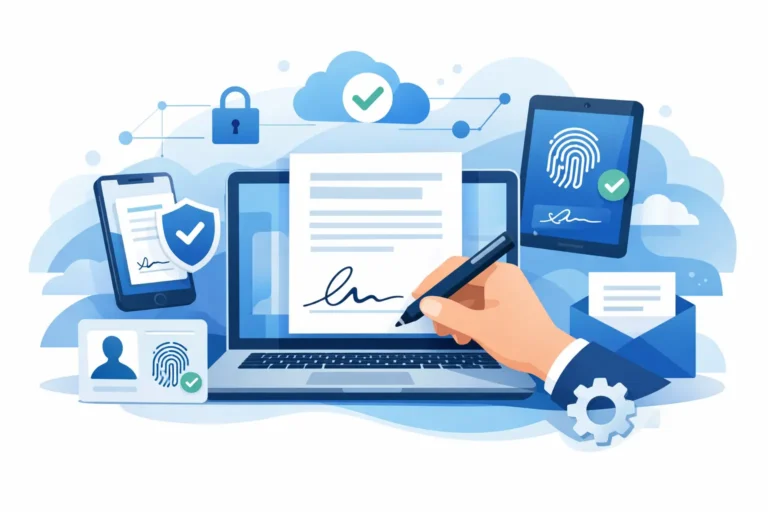
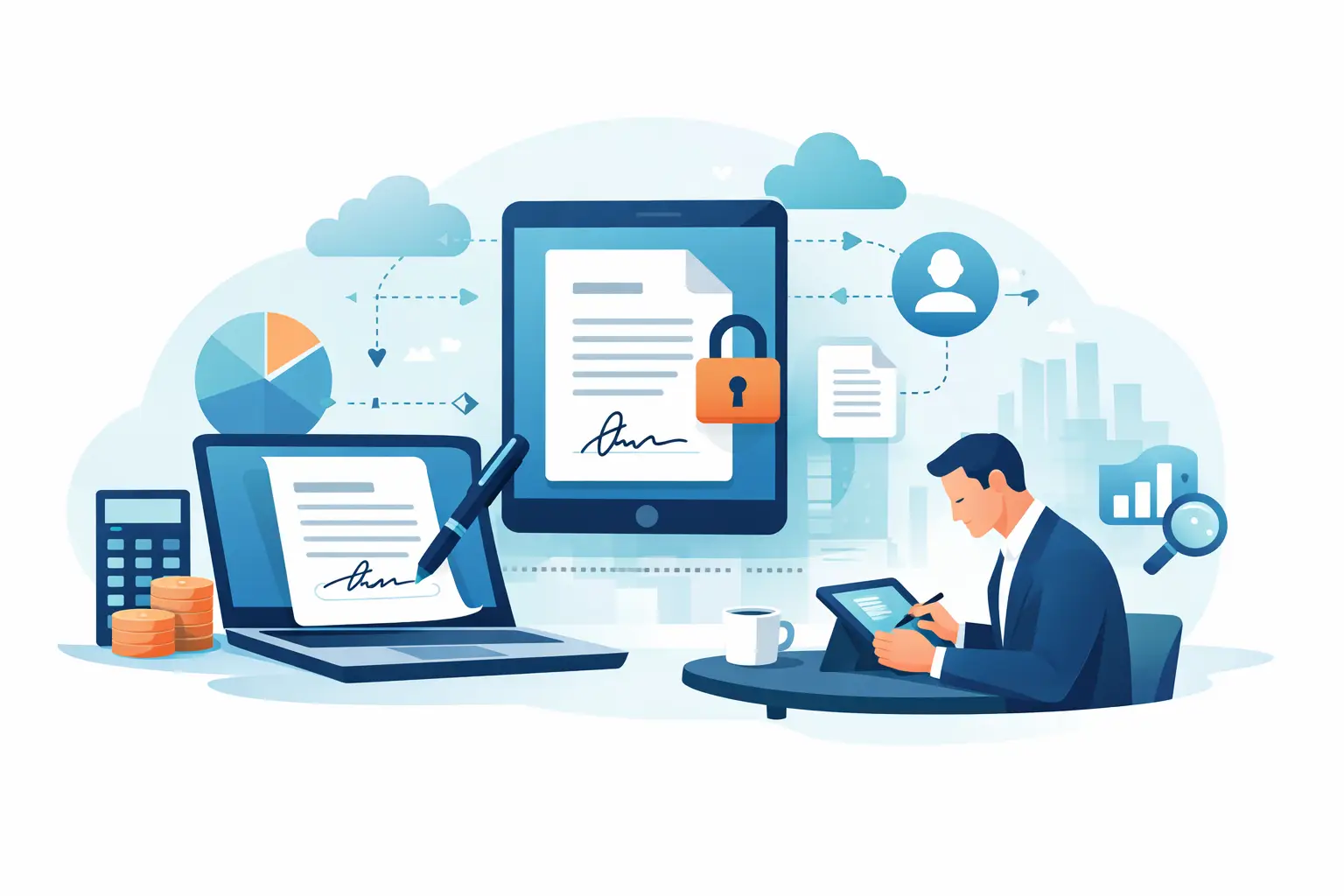
The phrase can sound broader than it needs to be. In practice, a good workflow covers the full path from document creation to signed storage. It should let you prepare the right contract from a template, assign signers in the right order, send it securely, track progress, capture an audit trail and store the final version where your team can find it without asking around.
That matters because accounting contracts are often repetitive, but not identical. Engagement letters, payroll service agreements, bookkeeping contracts, tax advisory terms and renewal documents all follow a pattern. The friction comes from the small changes – different legal entities, different fee schedules, extra signatories or a director who wants to review before signing.
A digital process brings structure to those variations without forcing your team into an enterprise system that feels built for a bank rather than a growing practice.
Where accountants lose time in contract handling
Most firms do not have one dramatic process failure. They have ten small inefficiencies. A manager edits last quarter’s document instead of using an approved template. A client signs the wrong page. Someone forgets to copy the finance lead. The signed version gets saved locally instead of in the shared system. None of this is unusual, but it adds up.
The real issue is that manual contract handling relies too heavily on memory. People must remember which version is current, who signs first, whether a witness is needed, which documents require stronger identity checks and where final files should be kept. When workload rises during year-end, tax season or audit periods, that informal approach starts to break.
A digital workflow reduces reliance on personal habits and replaces them with repeatable controls. That is the operational gain. The compliance gain is that you can show what happened, when it happened and who approved it.
The core stages of a workable process
A useful setup starts before the signature request is sent. The first stage is document preparation. This is where templates matter most. If your team regularly sends the same engagement terms with predictable variables, a template-based workflow cuts drafting time and reduces errors. It also helps protect approved legal language from well-meaning edits.
The second stage is signing logic. Not every contract should go to everyone at once. Some need an internal approval before the client sees the document. Others need a client signer first, then a countersignature from the practice partner. A proper workflow lets you define signing sequences rather than relying on a chain of forwarded emails.
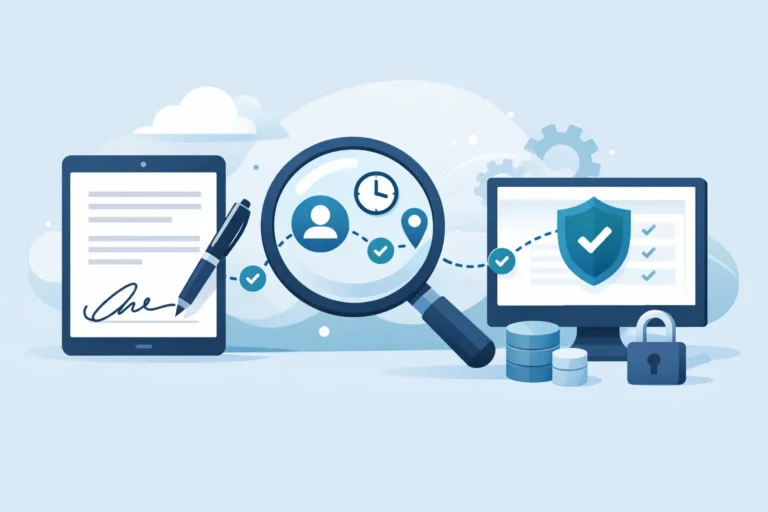
The third stage is visibility. Accountants need to know whether a document has been opened, signed, declined or left untouched. Status tracking sounds simple, but it removes a lot of avoidable chasing. Instead of asking, “Did they receive it?”, your team can act on actual document status.
The fourth stage is evidence and storage. Audit trails, timestamps and signer records are not optional extras when contracts affect regulated services and personal data. Once completed, the document should be stored in a structured way, not left scattered across inboxes and desktop folders.
Choosing the right signature level
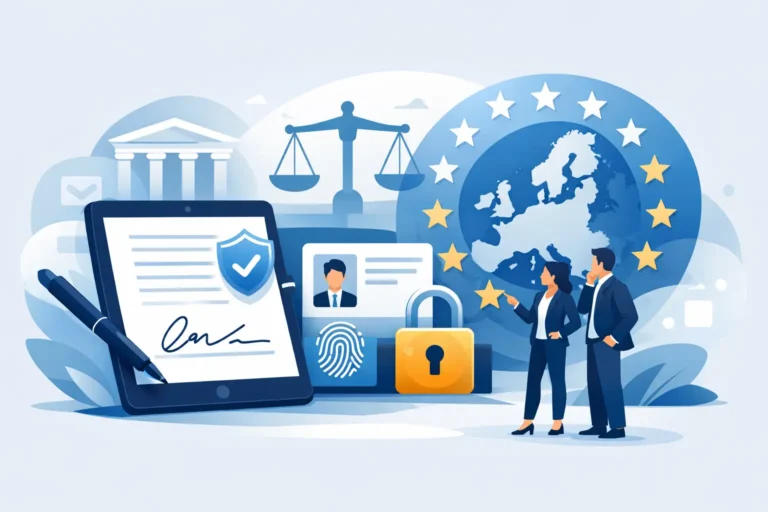
This is where many teams either overcomplicate the process or underestimate the requirement. Under eIDAS, electronic signatures can carry different assurance levels, including SES, AES and QES. The right choice depends on the document, the risk profile and your internal policy.
For many standard accounting engagement documents, a simple or advanced electronic signature may be entirely suitable. For higher-risk agreements, sensitive authorisations or situations where stronger signer identity evidence is needed, advanced or qualified options may be the better fit. The point is not to use the highest level every time. The point is to use the right level consistently.
That is especially relevant for firms working across EU member states, where legal certainty and evidence quality matter. A platform built around eIDAS-compliant workflows helps keep that decision practical rather than theoretical.
Why compliance cannot be bolted on later
Accountants are often expected to be the adults in the room on process discipline. Clients trust them with financial information, identity documents, payroll details and tax records. If your contract process is fast but weak on governance, you have solved the wrong problem.
A compliant workflow should support GDPR-conscious handling of documents, controlled access for team members and clear evidence of signer actions. European hosting can also matter, particularly for firms that want stronger data sovereignty and less ambiguity around where business-critical documents are processed and stored.
This is one reason many smaller firms become frustrated with generic signing tools. They may be easy to start with, but once questions arise around legal validity, auditability or data location, the gaps become obvious. Compliance-first software tends to be more useful in the long run because it reflects how regulated teams actually work.
What good implementation looks like in a small or mid-sized firm
The best rollout is usually narrower than people expect. Do not start by rebuilding every document flow at once. Start with one contract type that appears frequently and causes regular admin friction. Engagement letters are often the best candidate because they are standard enough to template and important enough to matter.
Map the current process honestly. Who prepares the contract, who reviews it, who sends it, who signs internally, who signs on the client side and where does the final file go? Once that path is visible, the unnecessary steps are usually obvious.
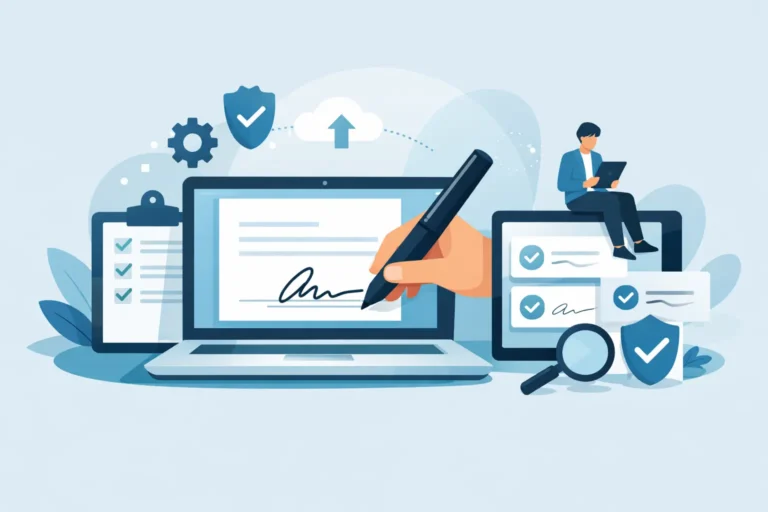
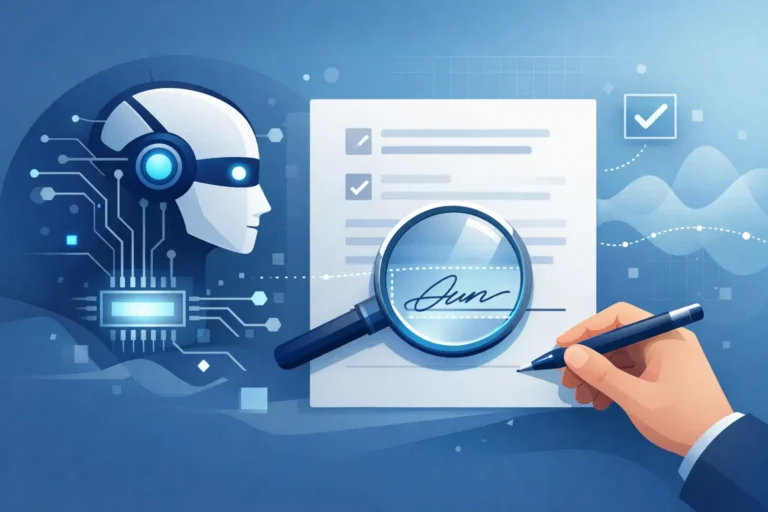
Then standardise the document itself. Create a template with fixed legal wording, variable fields and the right signing positions. If the platform supports AI field or signature detection, that can speed preparation further, especially for teams handling large volumes. Add signing order, reminders and internal access rules. At that point, the workflow is already doing meaningful work.
After one document type is working well, expand to adjacent processes such as proposal acceptance, annual renewals or payroll service terms. This staged approach is easier to manage, and it gives the team evidence that the new method actually saves time.
The trade-offs to consider
There is no perfect workflow for every firm. A highly standardised process is efficient, but it can feel rigid if your contracts vary widely by client. More flexible workflows suit bespoke advisory work, but they leave more room for inconsistency. The right balance depends on whether your firm handles volume, complexity or both.
There is also a trade-off between simplicity and assurance. Basic signatures may be quicker for low-risk agreements, while stronger signature types and identity verification add confidence but may introduce extra steps for the signer. For some firms, that additional friction is justified. For others, it would slow down client onboarding unnecessarily.
Pricing matters too. If advanced signatures are charged per use, teams may start making decisions based on cost rather than suitability. That is not ideal in a compliance-sensitive environment. A more predictable model can make it easier to choose the right workflow without second-guessing the budget.
What to look for in a platform
Accountants do not need feature bloat. They need templates, signing sequences, audit trails, status tracking, team collaboration and structured document organisation. They also need a clear compliance basis, especially if clients operate across Europe or expect stronger evidence standards.
Ease of use matters because the real bottleneck is often client adoption. If signing instructions are confusing or the process looks overly technical, completion rates suffer. At the same time, the back end should give administrators control over permissions, records and repeatable workflows.
This is where a platform such as Asignu fits well for European teams – straightforward deployment, eIDAS-aligned signing options, EU-focused compliance and no enterprise complexity for firms that simply want a clean, reliable process.
A better workflow changes more than admin time
When contracts move smoothly, client onboarding feels more professional. Internal approvals become easier to track. Teams spend less time chasing signatures and more time on billable or high-value work. Just as importantly, the firm gains a clearer record of who agreed to what and when.
That is the real value of a digital contract workflow for accountants. It is not about replacing pen and paper for the sake of modernisation. It is about building a contract process that matches the standards clients already expect from a finance professional – controlled, traceable and easy to trust.
If your current process still depends on inboxes, attachments and manual follow-ups, the next improvement probably is not another reminder email. It is a workflow your team can rely on every single time.