
Multi Signer Document Approval Process Guide
A contract sits ready to go, but it still needs approval from finance, legal, the department head and the final signatory. That is where a multi signer document approval process either keeps work moving or creates avoidable delay. For most small and mid-sized teams, the issue is not the number of approvers. It is the lack of structure around who reviews what, in which order, and how that decision is recorded.
When that structure is unclear, documents get sent twice, approvals happen in email threads, and nobody is fully sure which version was actually accepted. That creates operational friction, but it also creates compliance risk. If your team handles employment paperwork, supplier agreements, client contracts or regulated approvals, you need a process that is easy to follow and easy to evidence later.
What a multi signer document approval process should do
A good multi signer document approval process is not just about collecting several signatures on one file. It should control the full path from draft to final execution. That means defining review stages, assigning the right people, setting the signing order where needed, and keeping a reliable record of every action.
In practice, the best process does three things at once. It reduces delay, gives internal teams clarity, and produces an audit trail that stands up to scrutiny. Those three outcomes matter more than adding complicated workflow rules that nobody wants to manage.
For example, not every document needs the same route. A simple sales agreement may only require a manager and the client. A new supplier contract may need procurement, finance and legal before the authorised signatory approves it. An HR policy update may need internal approval only, with acknowledgement from staff afterwards. The process has to match the risk and purpose of the document.
Why multi-signer workflows often break down
Most approval problems start long before signature. Teams often work from inconsistent templates, send PDFs by post or email, and rely on memory to decide who should approve next. That works until volume increases, someone is on leave, or a document is challenged months later.
Another common problem is treating all signers as equal when their roles are different. Some participants are genuine decision-makers. Others are there to confirm budget, verify content, or provide formal authorisation on behalf of the business. If those roles are not separated, documents can be sent to the wrong people in the wrong order.
Then there is the issue of visibility. If nobody can quickly see whether a document is drafted, pending internal approval, sent for signature, signed, or expired, follow-up becomes manual. That wastes time and leads to exactly the kind of chasing that digital workflows are meant to remove.
How to build a practical multi signer document approval process
Start with the document types that matter most. Usually, these are contracts, HR forms, finance approvals and recurring supplier documents. Do not try to map every possible workflow on day one. It is better to create a small number of reliable approval paths that cover your highest-volume or highest-risk documents.
1. Define roles before you define software rules
Every approval flow should be based on roles, not on whoever happens to be available. You need to know who drafts the document, who reviews the content, who approves the decision, and who signs with authority.
This sounds obvious, but it removes a surprising amount of confusion. If legal reviews terms, finance approves spend, and a director signs, each stage has a clear purpose. If one person covers more than one role in a smaller business, that is fine, but the role itself should still be defined.
2. Decide where sequence matters
Some documents can be signed by multiple parties in any order. Others cannot. If an internal approval must happen before an external party sees the file, your workflow should enforce that. If a client should sign only after your authorised representative has approved final terms, the sequence should reflect it.
This is where many teams overcomplicate things. You do not need elaborate branching in every process. You simply need to decide whether signers act in parallel or in sequence, and where a step must be completed before the next one begins.
3. Standardise templates and fields
A strong approval process depends on consistency. If every team creates documents manually, approval becomes slower because reviewers are checking formatting, missing fields and basic errors instead of substance.
Templates solve that by giving teams a controlled starting point. Reusable fields, fixed clauses and standard signing blocks reduce avoidable edits. If you send the same types of documents regularly, template-based workflows save time and improve control at the same time.
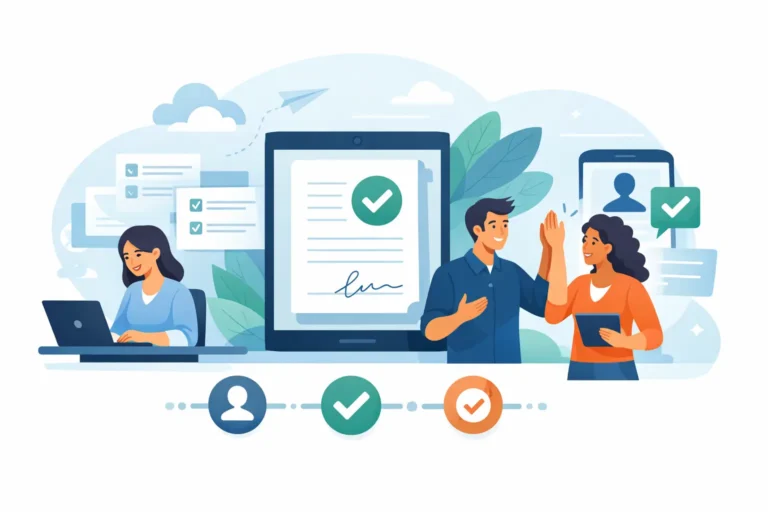
4. Use status tracking that people can trust
Approval workflows break when updates live in too many places. The current status should be visible in one system, with timestamps and user actions attached to the document record. That allows operations, HR, finance or legal teams to act without chasing colleagues for updates.
This is especially useful in growing organisations, where document ownership is spread across functions. A clear status view reduces the dependency on one person knowing what is happening.
Compliance matters more when multiple people are involved
The more people involved in a document, the more valuable proper evidence becomes. If a contract has passed through several internal and external signers, you need confidence that each action can be traced. That includes who received the document, who opened it, who signed it, and when each step happened.
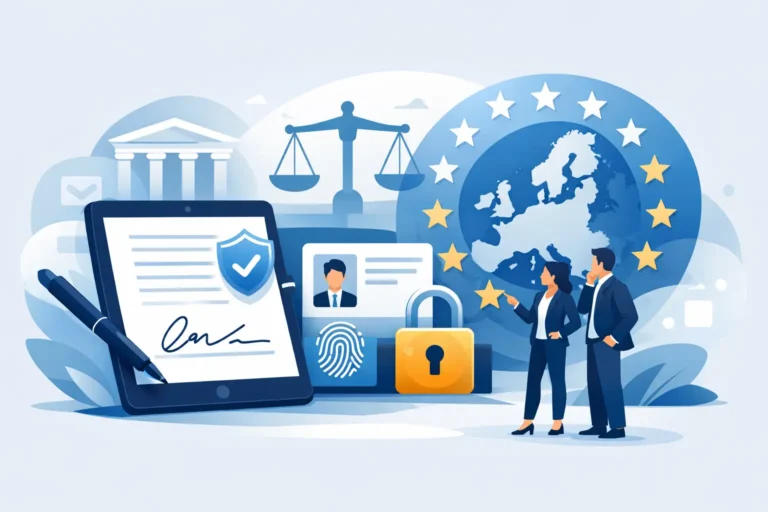
For European businesses, this is not just a process issue. It sits close to legal validity, data handling and internal governance. Depending on the document type, you may need to use a Simple Electronic Signature, Advanced Electronic Signature or Qualified Electronic Signature. The right level depends on risk, regulation and the nature of the agreement.
There is no single answer for every business. A low-risk internal approval may not need the same assurance level as a regulated employment or financial document. What matters is choosing a signing method that matches the use case and keeping evidence that supports that choice.
If your organisation operates across EU markets, hosting and data handling can also become relevant. Teams increasingly want to know where document data is stored and whether the provider supports European compliance expectations in a practical way, not just in marketing claims.
The best tools reduce admin without removing control
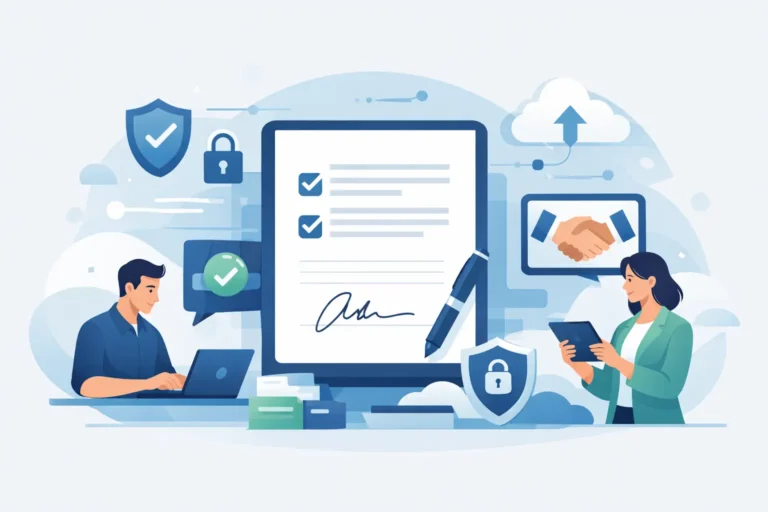
A useful digital approval workflow should make the process easier to run, not harder to explain. That means setting signer order quickly, applying templates, assigning fields accurately, and following progress without exporting data into separate trackers.
It should also support exceptions. Someone will be off sick. A deal will need urgent approval. A document will come back with amendments. If your workflow is too rigid, teams start bypassing it. If it is too loose, control disappears. The right balance is a process that is structured but still workable in real business conditions.
This is where straightforward platforms tend to outperform feature-heavy enterprise systems for smaller and mid-sized organisations. If the workflow is clear, the audit trail is complete, and the compliance standard is right for the document, you do not need unnecessary complexity. You need certainty, speed and visibility.
For businesses with frequent approval chains, features such as signing sequences, audit trails, reusable templates, AI field detection and structured document storage can make a measurable difference. They reduce the manual setup work that often slows teams down before the first signer even receives the document. That is one reason teams looking for a European, compliance-first option often prefer tools such as Asignu over enterprise software designed for much larger deployments.
Common mistakes to avoid in a multi signer document approval process
The first mistake is adding too many approvers because it feels safer. More approvals do not always mean better control. Often they just increase delay and make accountability weaker. Every signer should have a clear reason to be there.
The second is failing to separate approval from signature. Someone may need to review and approve content internally without being the person who signs the final document. If those actions are blended together, you can end up with the wrong person executing an agreement.
The third is relying on inboxes as the record of truth. Email is useful for communication, but it is a poor approval system. It is hard to track, easy to lose, and weak as formal evidence when compared with a proper document trail.
The fourth is ignoring renewal and repeat use. If you have built a good process for one contract type, turn it into a repeatable workflow. That is where the real efficiency gain sits.
When to keep it simple and when to add assurance
Not every document needs the highest-assurance signature type or the longest approval chain. For many SMEs, the most effective approach is tiered. Keep low-risk documents fast and straightforward. Add stronger identity checks, stricter signer order and higher-assurance signatures where legal or commercial risk justifies it.
That gives you a process people will actually use. It also avoids paying for complexity on every transaction when only a portion of documents truly require it.
A multi signer document approval process works best when it is clear enough for everyday users and strong enough for compliance teams. If your staff can follow it without training manuals, and your business can defend it when questions arise, you are on the right track.
The useful test is simple: when the next urgent contract lands on someone’s desk, your process should make the next step obvious.