Paperless Approvals for Growing Teams
A finance manager approves a supplier contract in Slack, HR sends an offer letter from email, and legal keeps the signed PDF in a shared drive called Final Final v3. That setup can work when a company is small. It starts to fail when volume rises, responsibilities split across teams, and nobody is quite sure which version was actually approved. That is where paperless approvals for growing teams stop being a nice efficiency project and become an operational requirement.
The real issue is not paper itself. It is fragmented decision-making. As teams grow, approvals multiply across hiring, procurement, sales, finance and compliance. If the process depends on inboxes, attachments and manual chasing, delays become normal and auditability becomes weak. A paperless approval flow fixes that by making the approval path visible, trackable and legally defensible.
Why paperless approvals for growing teams matter earlier than most expect
Many businesses wait until the process is clearly broken. By that point, the symptoms are already expensive. Contracts sit unsigned for days, employee onboarding slows down, and finance teams spend too much time checking whether the latest document is the correct one.
A proper approval workflow does more than remove printing and scanning. It creates a structured process around who needs to review, who needs to sign, in what order, and what evidence is retained afterwards. That matters for operational speed, but it matters just as much for governance.
For growing organisations, the pressure tends to come from three directions at once. First, document volume rises. Second, more stakeholders need visibility. Third, compliance expectations become more formal, especially in regulated sectors or cross-border EU operations. A lightweight process that felt perfectly acceptable at ten people often creates risk at fifty.
What a good paperless approval process actually looks like
The strongest setups are not the ones with the most features. They are the ones people actually use consistently. In practice, that means approvals should be easy to start, easy to route, and easy to verify later.
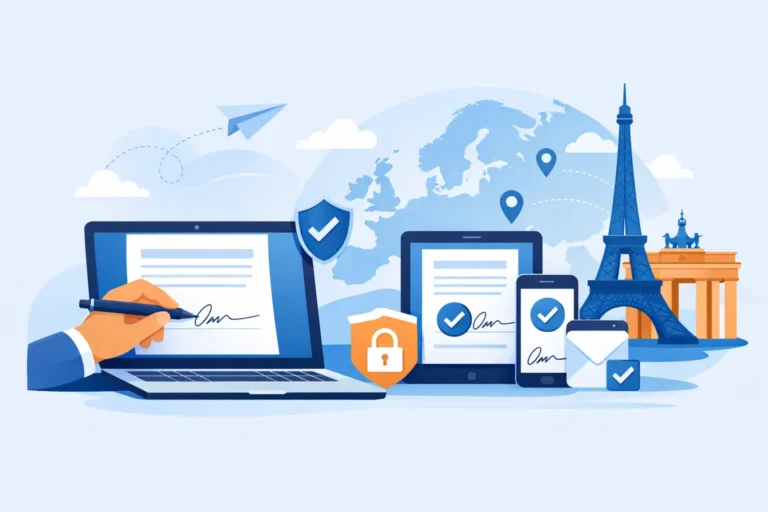
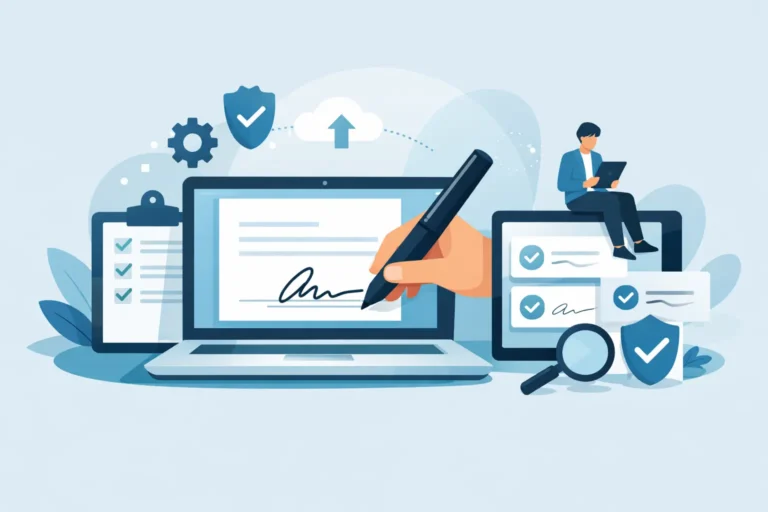
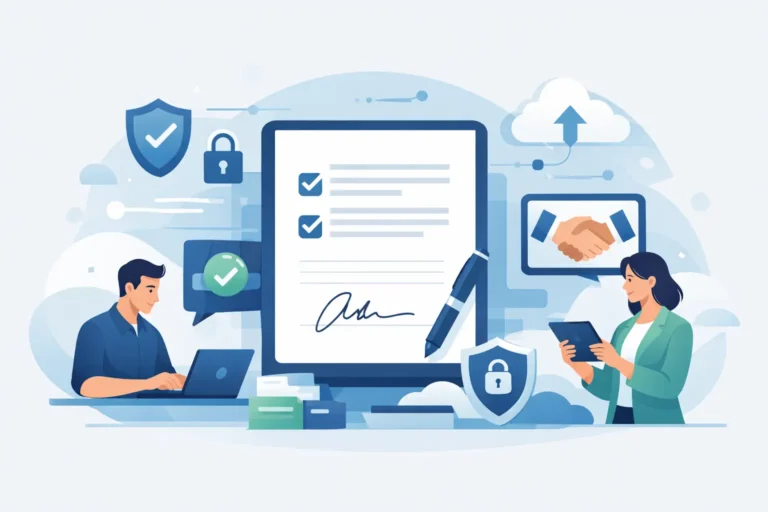
A sound workflow usually begins with a standardised document or template. The sender defines the signers, reviewers or approvers, adds fields, and sets the sequence. The system then tracks status centrally so the document does not disappear into someone’s inbox. Once completed, the final file and its audit trail are stored in an organised, searchable way.
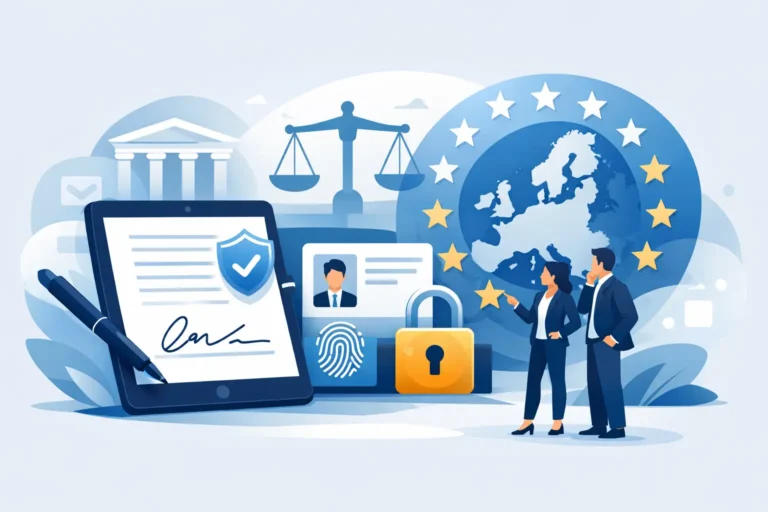
That sounds simple, but the details matter. Some approvals only need a basic signature and clear tracking. Others need stronger assurance through Advanced Electronic Signatures or even Qualified Electronic Signatures. For European businesses, legal validity is not a vague marketing point. It is tied to eIDAS rules, the type of signature used, and whether the platform can provide proper evidence if a signature is ever challenged.
Speed is only half the value
It is easy to sell paperless approvals on time savings alone. That benefit is real. Documents move faster when nobody needs to print, sign, scan and resend. Templates reduce repetitive admin. Automatic field detection and signature placement remove setup friction for routine paperwork.
But speed without control is not enough. A fast process can still be messy if nobody knows who approved what. The real value comes from combining pace with structure. You need clear routing, status visibility, timestamps, and a reliable record of actions taken.
This becomes especially important in HR, finance and legal workflows. An employment contract, board approval, supplier agreement or policy acknowledgement may need to be retrieved months later. If the approval history depends on people remembering what happened, the process is too fragile.
The trade-off: simplicity versus compliance depth
Not every approval requires the highest assurance level. That is where many teams either overcomplicate things or underprotect them.
If every document is pushed through a heavyweight identity verification flow, users become frustrated and turnaround times suffer. If every document is treated as a casual click-to-sign exercise, the business may end up with weak evidence for higher-risk transactions. The right balance depends on document type, internal policy and regulatory context.
For many growing teams, the best approach is tiered. Routine internal approvals and lower-risk business documents can follow a straightforward electronic signing process with strong tracking and controlled access. Higher-risk documents can use AES or QES where stronger signer identity, certificate-backed assurance or legal weight is required.
This is one reason European businesses need to think carefully about platform choice. The question is not only whether a tool supports digital signatures. It is whether it supports the right type of signature, provides an audit trail that stands up to scrutiny, and handles data in a way that fits GDPR and internal governance expectations.
Where paperless approval projects often go wrong
The most common failure is treating the problem as a file format issue. Converting a paper document into a PDF does not create a proper approval process. If approvals still happen through scattered emails and verbal sign-off, the organisation has only digitised the paperwork, not the workflow.
Another mistake is choosing software built for large enterprises with complex needs that smaller teams do not have. Feature bloat slows adoption. Staff revert to old habits because the system feels harder than the problem it is supposed to solve.
There is also a pricing trap. Some providers make advanced signatures expensive on a per-use basis. That can discourage teams from applying stronger assurance where it is genuinely needed. A better model gives growing organisations room to standardise compliant workflows without feeling penalised each time the assurance requirement increases.
Building paperless approvals without making life harder
The best rollout starts with one or two high-friction processes, not an attempt to redesign every approval path at once. Offer letters, sales contracts, supplier agreements and expense approvals are often good starting points because the pain is easy to see and the return is measurable.
Begin by mapping the current process honestly. Who starts the document, who reviews it, who signs it, and where does it live afterwards? Most teams discover extra manual steps they had stopped noticing. Once those are visible, it becomes easier to standardise templates, define signing sequences and remove bottlenecks.
Then focus on user behaviour. If the process takes too many clicks, people will bypass it. If status tracking is unclear, they will chase updates manually. If completed documents are not stored cleanly, retrieval becomes another admin burden. Good software should reduce work for the sender and provide certainty for everyone else.
For document-heavy teams, template workflows make a big difference. Reusing standard forms cuts setup time and reduces errors. AI-assisted field detection can help staff prepare documents faster, especially when volume is high. The practical benefit is not that AI is fashionable. It is that routine sending becomes less dependent on careful manual placement every single time.
Choosing a system for growing teams
When evaluating tools, growing businesses should ask a few direct questions. Can the platform support legally valid signatures across EU member states? Does it provide SES, AES and QES where needed? Is there a clear audit trail? Are documents hosted in a way that aligns with GDPR and internal data policies? Can teams manage approvals centrally without needing enterprise-level implementation work?
Usability matters just as much as compliance. A strong paperless approval system should be intuitive for occasional users, not only administrators. It should help teams send, sign, track and organise documents in one place. That is often more valuable than a long list of rarely used add-ons.
This is where a focused platform can outperform a larger but more cumbersome alternative. Asignu, for example, is built around practical document workflows for European businesses that need certainty without enterprise complexity. That combination matters for growing teams trying to stay efficient while tightening control.
What changes once the process is in place
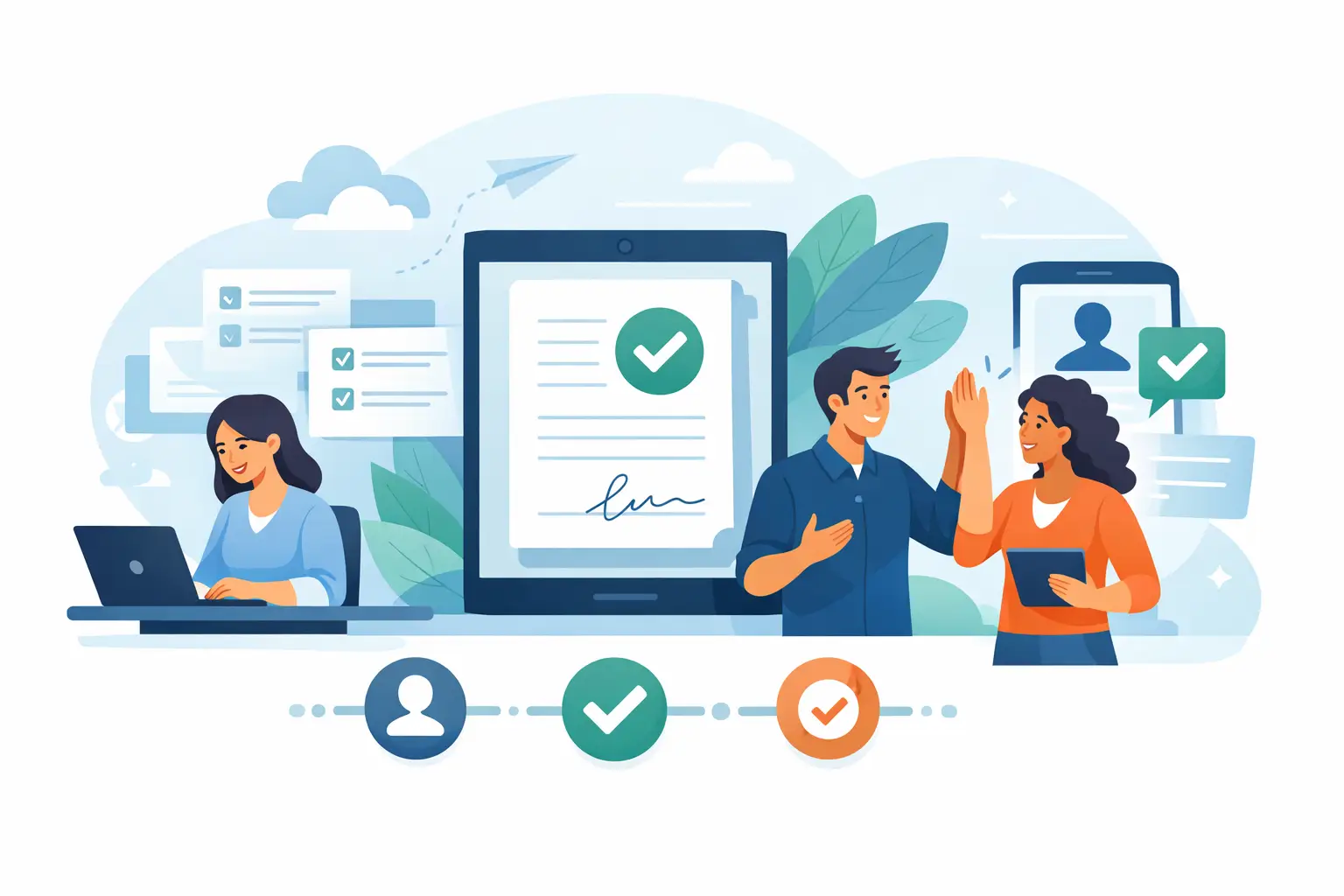
The first change is usually visibility. Managers stop asking where a document is because the status is already clear. The second is consistency. Teams use the same approval logic for similar documents instead of reinventing the process each time.
Over time, the bigger gain is confidence. Finance can rely on a clear record. HR can move faster without sacrificing traceability. Legal and compliance teams can point to documented steps rather than informal habits. That shift is hard to measure in a weekly report, but it becomes obvious when the business is under pressure.
Paperless approvals are not about replacing paper for the sake of it. They are about giving a growing organisation a process it can trust when more people, more documents and more risk enter the picture. If your approvals still depend on inbox memory and shared-drive guesswork, the right time to fix it is usually sooner than it looks. Start with one workflow, make it clean, and build from there.