SES AES QES Differences Explained
If you are comparing ses aes qes differences because a contract, HR pack or approval flow suddenly needs “the right type” of e-signature, the real question is simpler than it looks. How much legal assurance do you need for this document, and how much friction can your team afford in the signing process?
That is where many businesses get stuck. They know electronic signatures are legal in the EU, but they are less sure when a Simple Electronic Signature is enough, when an Advanced Electronic Signature is the safer choice, and when only a Qualified Electronic Signature will do. The answer depends on risk, regulation and the practical reality of getting documents signed on time.
What SES, AES and QES actually mean
Under eIDAS, electronic signatures are not all treated in the same way. There are three main levels, and each one provides a different degree of evidential strength and signer assurance.
A Simple Electronic Signature, or SES, is the broadest category. In practice, this can include a typed name, a tick-box, a scanned signature pasted into a PDF, or a basic click-to-sign action. SES is easy to use and works well for low-risk business documents, but it offers the least assurance if a signature is later challenged.
An Advanced Electronic Signature, or AES, goes further. It must be uniquely linked to the signer, capable of identifying them, created using data that the signer can use under their sole control, and linked to the signed data so that any later change is detectable. In practical business terms, AES is designed to give you stronger evidence around who signed and whether the document was altered.
A Qualified Electronic Signature, or QES, is the highest level. It is a specific type of advanced signature created using a qualified signature creation device and based on a qualified certificate issued by a qualified trust service provider. In the EU, QES has the strongest legal effect and is generally treated as equivalent to a handwritten signature.
SES AES QES differences in plain business terms
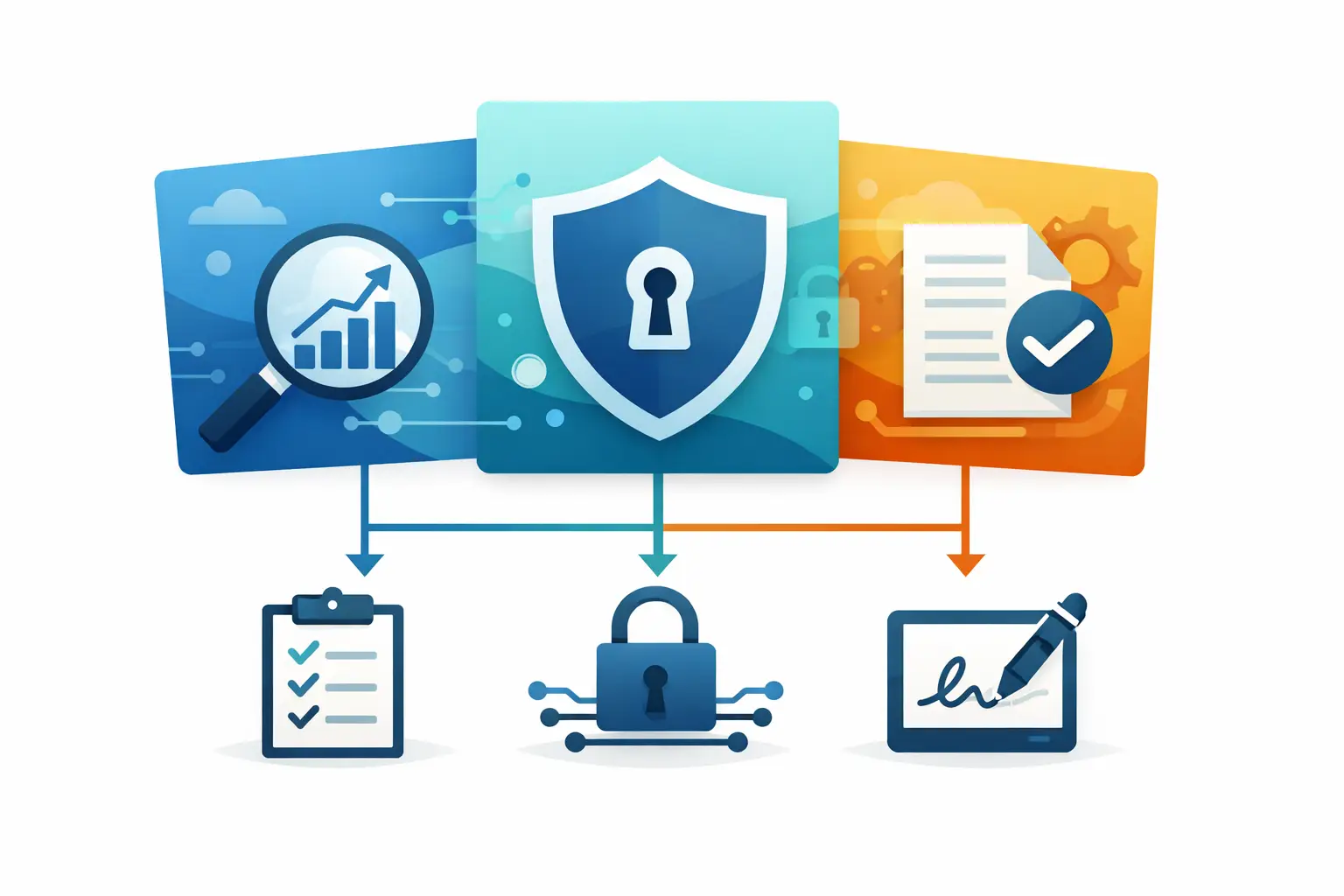
The cleanest way to think about ses aes qes differences is this: SES prioritises convenience, AES balances usability with stronger proof, and QES is built for high-assurance or legally formal use cases.
SES is often enough when the document is routine, the risk is low and the commercial value is limited. Internal acknowledgements, basic approvals or lightweight service agreements may fit here. If nobody expects a dispute and the document does not sit in a regulated process, SES can be entirely reasonable.
AES is the practical middle ground for many SMEs and professional teams. It gives better auditability and stronger evidential value without forcing every signer through the more formal identity steps that QES usually requires. For employment agreements, sales contracts, supplier documentation, approval records and recurring operational paperwork, AES is often where compliance and efficiency meet.
QES is for cases where the legal framework, industry practice or internal risk policy demands the highest level of certainty. This may apply to highly regulated workflows, documents that are more likely to be disputed, or formal transactions where a stronger legal presumption matters.
Why the distinction matters under eIDAS
A common misunderstanding is that SES is “not legal” and QES is the only valid option. That is not correct. Under eIDAS, electronic signatures cannot be denied legal effect solely because they are electronic. So SES, AES and QES can all be legally valid.
The difference is not basic legality. It is evidential weight, reliability and how easy it is to defend the signature if someone later says, “I did not sign this” or “the document was changed”.
That distinction matters most when your team handles contracts at scale. Finance may be signing approvals every day. HR may be sending offer letters and policy acknowledgements. Legal may need better control over audit trails. Operations may simply need a process that people actually complete. The right signature level should reduce risk without slowing the business unnecessarily.
When SES is enough
SES works best when speed matters more than formal assurance. Think of low-risk documents where the consequences of challenge are limited, the parties know each other, and the surrounding evidence already supports the transaction.
For example, an internal policy acknowledgement may not justify a high-friction identity check. A simple signature action, combined with timestamping and document records, may be proportionate. The same can be true for routine approvals or low-value service confirmations.
The trade-off is straightforward. SES is easy for signers, but if a dispute happens, you may need more supporting evidence outside the signature itself. That can still be workable, but it is not ideal for documents where identity, intent and integrity need to be demonstrated more clearly.
When AES is the smarter choice
For many European businesses, AES is the operational sweet spot. It raises assurance without introducing enterprise-style complexity into every workflow.
If you send employment contracts, client agreements, procurement paperwork or recurring commercial documents, AES often makes more sense than SES. You get a stronger link between signer and signature, better protection against later tampering concerns, and a clearer audit trail. That matters if your business wants certainty but also needs documents returned quickly.
This is also where pricing and workflow design become important. Some providers make advanced signatures expensive or awkward by charging per use or hiding them behind specialist plans. For document-heavy teams, that quickly becomes a cost and process problem. A platform such as Asignu is built around a more practical model, including unlimited AES, which is far better suited to growing teams that need legally stronger signing without constant budget friction.
When QES is worth the extra step
QES brings the highest level of trust, but it also tends to involve more identity verification and a more formal signing flow. That does not make it bad. It just means it should be used where the additional assurance genuinely adds value.
In some sectors or document categories, QES may be required by law, expected by counterparties or preferred by compliance teams. In others, it may simply be the safest route for high-value or high-risk transactions.
The question is not whether QES is “better” in the abstract. It is whether the document justifies the added formality. If every routine agreement is pushed into a qualified signing journey, completion rates may drop and internal teams may create workarounds outside approved systems. That defeats the point of having a controlled signing process.
How to choose the right level for each workflow
The most reliable approach is to classify documents by risk and requirement, not by habit. Start with three questions.
First, is there a legal or sector-specific requirement for QES? If yes, the decision is easy.
Second, if the document is challenged later, how important will it be to prove who signed, when they signed and that the document was not altered? If that matters, AES is often the minimum sensible choice.
Third, how much signer friction is acceptable? A sales team sending standard agreements may need a faster path than a legal team handling a formal high-value document.
This is why one-size-fits-all policies usually fail. HR, finance, legal and operations often need different defaults. A sensible signature policy should reflect real business risk, not theoretical perfection.
Common mistakes businesses make
One mistake is choosing SES for everything because it feels easiest. That may work until a sensitive document is disputed and the evidence is thin.
Another is insisting on QES for every workflow. That can increase delay, confuse signers and create unnecessary cost. It can also lead teams to bypass approved tools when they are under pressure.
A third mistake is focusing only on signature type while ignoring the wider process. Audit trails, document status tracking, signer sequencing, template control and secure storage all matter. A compliant signature sitting inside a messy workflow still creates operational risk.
The practical view on SES AES QES differences
For most SMEs and professional teams, ses aes qes differences are less about technical labels and more about matching assurance to business reality. SES is fine for low-risk simplicity. AES is often the best fit for day-to-day commercial and people processes. QES is there when the document, regulation or risk level truly calls for the highest assurance.
The strongest signing setup is not the most complex one. It is the one your team can apply consistently, explain clearly and defend confidently when it matters. If your workflows are built for clarity and ease of use, people sign faster, compliance improves and documents stop getting stuck in the wrong queue.
A useful rule of thumb is this: choose the lowest-friction option that still gives your organisation the legal certainty the document deserves. That is usually where good process starts.