DocuSign vs European alternatives
If your team handles contracts, HR packs, client approvals or finance paperwork across the EU, the choice between DocuSign vs European alternatives is rarely about signing alone. It is usually about where data sits, how signatures hold up under eIDAS, how quickly staff can send repeat documents, and whether pricing still makes sense once usage grows.
That is why many European businesses are reassessing the default choice. DocuSign is well known and widely used, but recognition is not the same as fit. For small and medium-sized organisations that need legal certainty without enterprise overhead, European providers can be a more practical match.
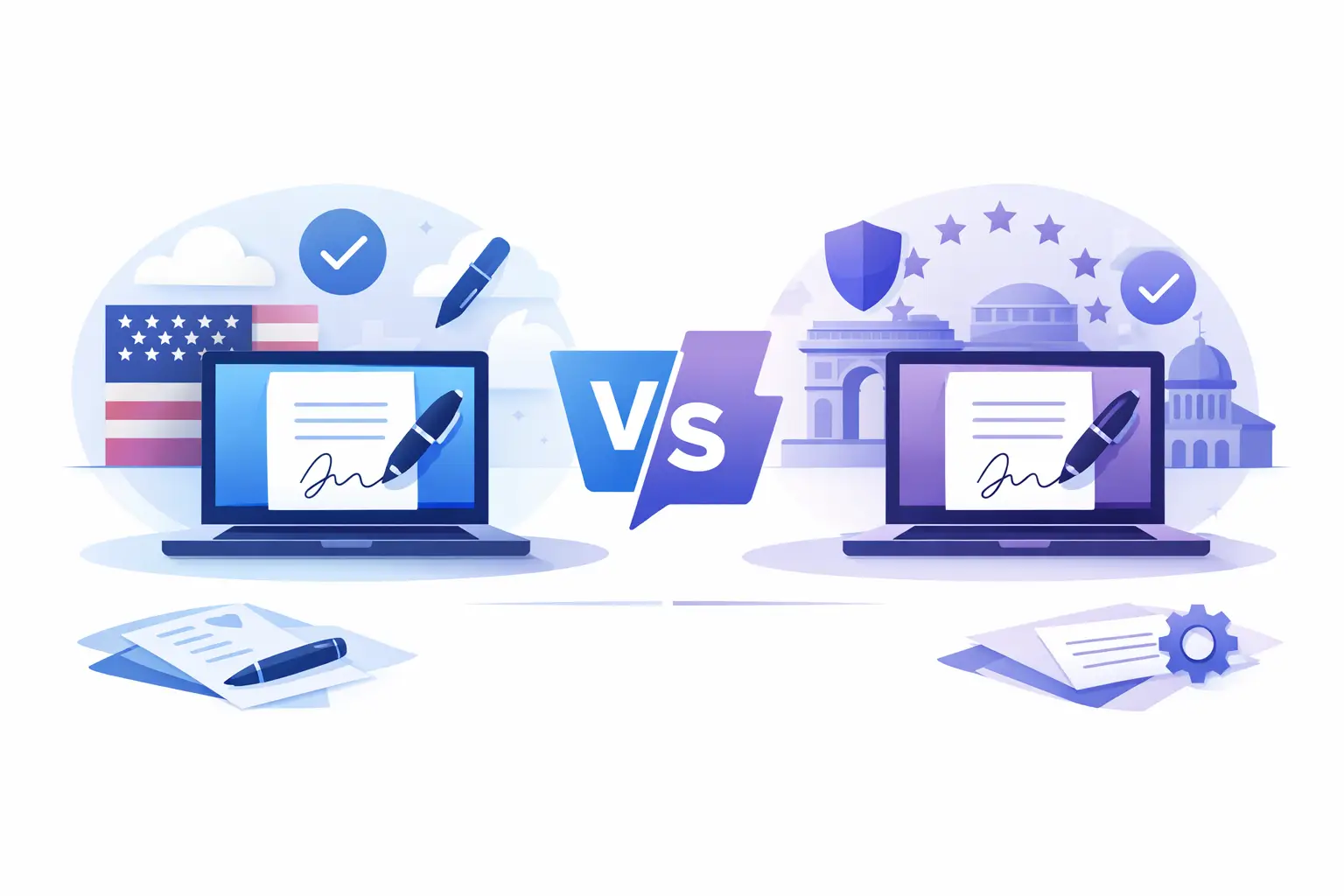
DocuSign vs European alternatives: what really changes?
The obvious difference is geography, but that is not the main buying factor. What matters more is how a provider is built around European legal and operational requirements from the start.
DocuSign serves a global market. That gives it broad reach, but it can also mean the product is designed around the needs of large organisations with complex procurement, layered administration and a wide feature set that not every team will use. For some businesses, that is fine. For others, it creates friction – more settings, more internal training and more cost than the actual signing workflow justifies.
European alternatives tend to focus more directly on eIDAS, GDPR expectations, EU data handling and practical document processes used by local businesses. That often leads to a simpler product shape. Instead of trying to cover every possible enterprise edge case, the software is built to send, sign, track and organise documents in a way that is easier for operations, HR, finance and legal teams to manage day to day.
Compliance is not a side issue
For EU businesses, compliance is often the deciding factor. Electronic signatures are not all equal, and the difference matters when documents carry legal, financial or regulatory weight.
Under eIDAS, businesses may need Simple Electronic Signatures, Advanced Electronic Signatures or Qualified Electronic Signatures depending on the risk level and the use case. A basic approval flow may be fine with SES. An employment agreement, supplier contract or internal approval with stronger evidential requirements may push a team towards AES. In higher-assurance cases, QES may be necessary.
This is where European alternatives can have an advantage. Many are designed to explain and support these levels clearly rather than treating compliance as background detail. That matters for teams that do not have in-house legal specialists reviewing every workflow.
A platform built around EU requirements is also more likely to present GDPR and data residency choices in a way that makes procurement and compliance reviews easier. If your business has already had difficult conversations about where personal data is stored, who can access it and what safeguards exist, this is not a minor feature. It is part of operational risk management.
Hosting and data sovereignty matter more than they used to
A few years ago, some buyers treated hosting location as a technical note. Now it is often a board-level or procurement-level question.
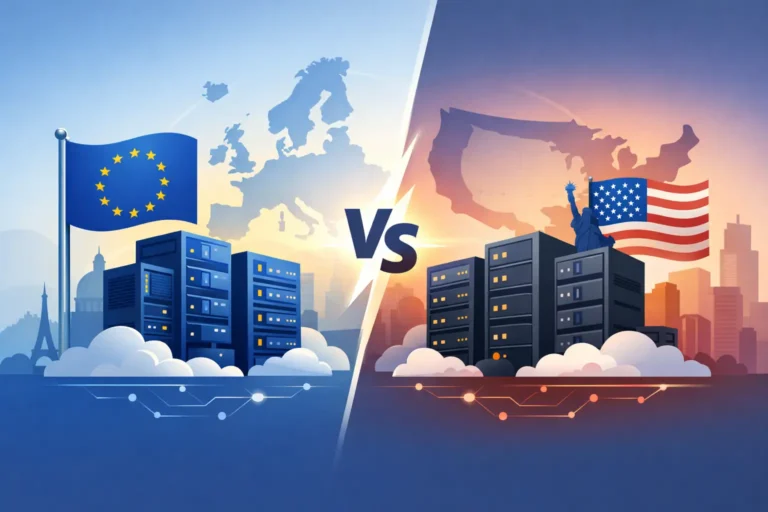
European alternatives typically make EU-only hosting and European data handling a central part of their offer. That gives businesses a clearer answer when customers, auditors or internal stakeholders ask where documents and signing metadata are processed and stored. For regulated sectors, or any company dealing with sensitive employee and client information, that clarity can remove a lot of friction.
DocuSign may still work for businesses that are comfortable with its setup and governance model. But if your priority is straightforward EU data sovereignty, a European-first provider can be easier to justify internally. The fewer exceptions your team needs to explain, the better.
Pricing is where comparisons become very real
Software buying decisions often start with features and end with finance. E-signature platforms are no different.
DocuSign can become expensive as usage grows, especially when more advanced signature types or higher-volume workflows are involved. That is often where smaller businesses feel the gap between enterprise packaging and practical need. A platform may look acceptable at entry level, then become harder to defend once more users, templates, workflows or stronger assurance methods are required.
European alternatives are not always cheaper across every scenario, but many are more transparent and more aligned with how SMEs actually work. That can mean clearer per-user pricing, fewer surprise restrictions and better value for recurring business documents.
This is also where product design matters. If a provider includes advanced signing capabilities in a more generous way, the cost difference over a year can be significant for HR teams, accountants, legal administrators and operations managers sending large numbers of routine documents. One European provider, Asignu, stands out here by including unlimited Advanced Electronic Signatures in its pricing, which is a meaningful distinction for businesses that need stronger legal assurance without paying per use.
Workflow simplicity can beat feature depth
Not every business needs a heavyweight document platform. Many simply need to send the right document, place the right fields, set the signing order, track completion and find the file later without a mess.
This is where European alternatives often feel more focused. They tend to place more emphasis on practical workflows such as templates for repeat documents, structured document storage, signing sequences, audit trails and clear status tracking. Those functions are not flashy, but they save time every week.
For document-heavy teams, speed matters. If your HR lead sends onboarding packs every Monday, or your finance team pushes out approvals at month end, reducing setup time on each document has a direct operational value. AI-based field detection and automatic signature detection can help here too, provided they are implemented simply and accurately rather than added as a gimmick.
DocuSign offers broad capability, but broad capability is not always the same as ease of use. If your team only touches a small percentage of the product, complexity becomes a cost in itself.
When DocuSign may still be the right choice
A balanced comparison should say this clearly: DocuSign is not the wrong choice for every European business.
If your organisation is already deeply embedded in the DocuSign ecosystem, has global subsidiaries, needs specific enterprise integrations or has internal teams trained around it, switching may create more disruption than benefit in the short term. Large multinational procurement environments often value standardisation over local optimisation.
It may also suit businesses that need a provider recognised across multiple regions and buyer groups. Brand familiarity can smooth adoption, even if the product is not perfectly tailored to EU-specific priorities.
The real question is whether you are paying for that global footprint and enterprise breadth when what you actually need is legal validity across the EU, straightforward deployment and better control over data and cost.
How to assess European alternatives properly
The strongest comparison is not a feature checklist. It is a workflow review.
Start with your real documents. Look at the forms, contracts and approval records your team sends every week. Then ask which signature level each one actually requires, whether signers need identity verification, where the data must be hosted and how often the document will be reused as a template.
Next, test the administration side. Can your team create signing sequences without support tickets? Can managers track status easily? Are audit trails clear enough for legal or compliance review? Is document organisation built in, or will signed files end up scattered across inboxes and shared drives?
Then look at commercial fit. Not just the headline monthly cost, but the total cost once your expected volume, users and signature assurance needs are included. This is where apparently small pricing details can change the outcome substantially.
Finally, assess the platform from the perspective of the least technical person who needs to use it. A signing tool should reduce friction, not create another training burden.
What European buyers should prioritise now
For most SMEs and growing teams in Europe, the shortlist should be shaped by five things: eIDAS support, GDPR clarity, EU hosting, workflow usability and pricing that does not punish normal business volume.
That mix tends to favour European alternatives when the business priority is certainty and control rather than enterprise brand familiarity. It is not about buying local for its own sake. It is about choosing a tool built around the legal and operational reality your team actually works in.
If you are comparing DocuSign vs European alternatives, the better option is usually the one that makes compliance easier to understand, keeps data handling straightforward, and helps staff process documents faster without loading the business with unnecessary complexity. A good signing platform should feel less like a software project and more like one less problem for your team to manage.